Over 150 hectares of sugarcane fields have been destroyed in Cameroon due to violent clashes between workers at the Société Sucrière du Cameroun (SOSUCAM) and police. The unrest, which erupted earlier …
FIFA has announced the immediate suspension of the Congolese Football Federation (FECOFOOT), following escalating tensions between the Ministry of Sports and the football body. The dispute, which has been ongoing for …
A federal judge has delivered a major blow to President Donald Trump and his ally, billionaire Elon Musk, halting plans to pull thousands of staffers from the U.S. Agency for International …
An 8-year-old boy has reportedly been tortured by his aunt for eating N50 groundnut. The incident happened at Anantigha, Calabar South, on Sunday, August 16, when the aunt returned from Sunday …
An 8-year-old boy has reportedly been tortured by his aunt for eating N50 groundnut.
The incident happened at Anantigha, Calabar South, on Sunday, August 16, when the aunt returned from Sunday service to discover that the groundnut was gone.
She questioned the 8-year-old boy about it, then plugged in an electric iron and used it to burn his back and buttocks. When she was done, she refused to give him food. Old scars on the boy’s burnt fingers also revealed that it isn’t the first time she has abused him since he started living with her about three years ago.
Speaking with a correspondent on Monday, August 17, the Principal Counsel, Basic Rights Initiative, James Ibor Esq., said they received a call from Girl Power Initiative, GPI, about a lady who had been assaulting her nephew with hot iron, burning stove and other hot objects.
According to Ibor, she plugged an electric iron and burnt the boys back and buttocks; because he ate the N50 left-over groundnut and that was not the first time that such was happening.
ALSO READ: 11-year-old orphan narrates how she was assaulted by stepfather
He said:
“From what the boy has told us, which is also very visible; he has been tortured and traumatised; and the boy is in serious pains. From here we are taking him to a medical facility where he can get adequate care.
“We have written to the Police and the state Ministry of Humanities and Social Welfare to enable us take good care of him in our own shelter home; because we cannot allow the child to go back to the aunty again.
“We have also invited the father, because the mother is late. Further actions can be taken as he and two of his siblings live with the said aunty.
“It is unfortunate that this kind of dastardly act and injury can be inflicted on a child. Even if he ate the groundnut, there is no justification for this kind of wickedness.”
Nigeria to host maiden Conference of African Speakers and Heads of ParliamentThe Speaker of the House of Representatives, Rep. Femi Gbajabiamila on Monday convened a meeting of some African Speakers of …
Nigeria to host maiden Conference of African Speakers and Heads of Parliament The Speaker of the House of Representatives, Rep. Femi Gbajabiamila on Monday convened a meeting of some African Speakers of Parliaments where it was agreed that there is an urgent need to push for debt cancellation for the continent from their multilateral and bilateral partners. This is as Gbajabiamila’s initiative to establish the Conference of African Speakers and Heads of Parliament (CoSAP), a body that will facilitate increased collaboration between Speakers, Heads of Parliament and National Assemblies across Africa got a boost. The African Speakers will also seek to advance the African development agenda within and outside the continent in conjunction with both the executive arms of government as well as African regional institutions.
These emerged following a virtual meeting conveyed by Gbajabiamila on Monday with Hon. Tagesse Chafo, Speaker, House of Peoples Representatives, Ethiopia; Rt. Hon. Prof. Aaron Mike Oquaye, PhD, Speaker of Parliament, Ghana; Hon. Justin Bedan Muturi, Speaker, National Assembly, Republic of Kenya; Rt. Hon. Donatille Mukabalisa, Speaker, Chamber of Deputies, Rwanda; and President Moustapha Niasse, AFP, President, National Assembly, Senegal. In his opening remarks, Gbajabiamila said there was an urgent need to join local and global efforts to push for the cancellation of the external debt owed by various countries on the continent. Saying that development across the continent has become stunted due to the heavy burden of the debts, Gbajabiamila noted that the outbreak of the coronavirus (COVID-19) has compounded the issue for the continent, considering the socio-political and economic consequences of the disease. “We all agree that Africa’s debt burden has become an existential threat to our societies, our economies and the future; we leave to posterity, and we need to do something about this and treat it as a continent-wide priority. “It is safe to say that the burden of debt servicing, vis-à-vis spending on education and health care for example, is a threat to our continent’s stability and development, especially in the era of Covid-19. “When we find ourselves having to make policy choices between paying debts or saving lives, we know something is not morally right. And as democratically elected representatives of our people, we cannot be silent. We must speak up and we must act. And the time to act is now. “Furthermore, is the need for us to reflect on, the processes that led to Africa’s heavy indebtedness in the first place, the role parliamentarians can play to address this going forward and what assurances we as parliamentarians can give our borrowers that if our debt is cancelled, the freed-up resources will be invested in social and economic development of our citizens. “If we want debt cancellation, we must be able to build the confidence of the borrowers that the cancellation will indeed save lives and livelihoods across the continent, and we, as Speakers and Heads of our parliaments, will ensure that is indeed the case”. On the need for the establishment of the Pan-African Speaker’s Conference, Gbajabiamila noted that collective efforts at tackling challenges facing the continent have become expedient. He said: “The motive behind this initiative is that each year we identify a theme, issue, or challenge that is pan-African in scope and we meet to deliberate on how we can work together across parliaments in Africa to tackle these continental issues and challenges. “As heads of our respective parliamentary entities, it will also be a good platform to share experiences and expertise in different aspects of our legislative duties pertinent to the growth, development and sustenance of our economies and our societies; and on ways to enhance the capacity and impact of our parliaments on our democracies and the lives of the peoples we all represent. “We have spent decades learning from the rest of the world, now we must begin to learn from one another”. Throwing his weight behind the two initiatives, Hon. Tagesse Chafo, Speaker, House of Peoples Representatives, Ethiopia, noted that though almost every government on the continent has been trying to seek debt forgiveness, this should not, however, stop the parliaments from contributing to the efforts through a platform such as this. “As representatives of our people, we are to come together, advise and campaign about the issue, we don’t have to keep quiet because debt cancellation would be good for the resuscitation of our economies that have been ravaged by the COVID-19 pandemic,” he added. In the same vein, Rt. Hon. Prof. Aaron Mike Oquaye, Speaker of Parliament, Ghana noted that the debt burden is essentially a common challenge on the continent, as most African countries have to depend on foreign loans to execute their national budgets. He, however, noted that the Speaker’s group, in its efforts to push for debt cancellation must be able to convince the creditors about accountability if they hope to succeed. He said: “Donor agencies are interested in accountability because they are confounded about the issue of corruption, and we must be able to give the assurance and that is why the Speakers Conference is critical. And if nothing is done, there may be no economy to service the loans” Hon. Justin Bedan Muturi, Speaker, National Assembly, Republic of Kenya also emphasised the need for the initiative, adding that, the coronavirus pandemic has undermined most African economies because conditions attached to most of the loans have been eroded by the consequences of the novel pandemic. On her part, Rt. Hon. Donatille Mukabalisa, Speaker, Chamber of Deputies, Rwanda, while noting that African countries depend on and heavily burdened by loans even before the pandemic, however, added that the group must be clear about the kind of debt it is seeking to address and from which partners. While President Moustapha Niasse, AFP, President, National Assembly, Senegal also regretted that the pandemic has affected all economies on the continent negatively, he, however, suggested that opinions of members of the forum must be sought on how to solve the issues between suspension or cancellation of debt “We must be convinced that we have a job to do at the level of parliament,” he added. It was also agreed that a Communique would be released in the first week of September 2020, while the campaign for implementations of the plan of action would begin in the second week of September 2020 as well. According to the forum, the third week of September would be devoted to the planning for the 2021 conference by the Secretariat. While it was decided that Nigeria would host the maiden edition of CoSAP chaired by Nigerian Speaker the Rt. Hon Femi Gbajabiamila, the new body is expected to meet again in the first week of September to approve the plans and swing into action
The Federal government has decried the closure of Nigerian Traders shops in Ghana saying urgent steps would be taken to address the issue. The Ghanian authorities had explained that the closure …
The Federal government has decried the closure of Nigerian Traders shops in Ghana saying urgent steps would be taken to address the issue.
The Ghanian authorities had explained that the closure of the shops belonging to Nigerian traders was premised on their ‘failure’ to pay the Ghana Investment Promotion Council (GIPC) registration fees. The requirement for GIPC registration is $1 million minimum foreign equity, while registration fee is 31,500 cedis. While reacting, the Minister of Foreign Affairs, Geoffrey Onyeama described the closure of the shops as painful. “Nigerian Government has watched with dismay the painful videos of the forceful closure of the shops of Nigerian traders in #Ghana. Urgent steps will be taken.” he twitted.
The president of Nigerian Traders Union in Ghana, Mr Chukwuemeka Nnaji, had in an interview decried the closure of shops owned by Nigerians, saying the Ghanaian authorities demanded cash payment of $1million from them before the shops would be opened.
He said an inter-ministerial task force went round on August 10 to identify shops owned by Nigerian traders and requested for registration of business taxes, resident permit, standard control and Ghana Investment Promotion Council (GIPC) registration.
Nnaji, added that the humiliation of Nigerians in Ghana, “is getting out of hands” just as he called for the intervention of the Nigerian government.
Popular social media personality, Ismaila Mustapha, aka Mompha, has been rearrested by the Economic and Financial Crimes Commission (EFCC) has re-arrested over charges of money laundering. Mompha is facing charges before …
Popular social media personality, Ismaila Mustapha, aka Mompha, has been rearrested by the Economic and Financial Crimes Commission (EFCC) has re-arrested over charges of money laundering.
Mompha is facing charges before the Federal High Court.
The Nation learnt Mompha was re-arrested last Friday when he went to the EFCC office in Ikoyi, Lagos.
He was at the office to reclaim his five wristwatches, one Apple Air pod, one iPhone 8 mobile phones and one pair of sunglasses seized from him by the anti-graft agency.
Following an application by his lawyer, Mr Gboyega Oyewole (SAN), Justice Mohammed Liman on July 24 ordered the EFCC to release the items to Mompha.
The judge ruled since the items were not listed as exhibits in the money laundering charges filed against Mompha, the EFCC had no justification to continue to hold onto them.
He dismissed the submission by the EFCC that Mompha was still under investigation for another offence, saying there was nothing before the court to back the submission.
“Failure to release the property is illegal. As of today, no charge has been file regarding the items. It is too long to withhold the applicant properties,” the judge had held.
It was gathered Mompha had barely left the premises of the EFCC office in Ikoyi after collecting the items on Friday when operatives of the anti-graft agency waylaid him and returned him into custody.
If you will recall popular instagram celebrity Huspupi is still in prison in the US facing money laundering and cyber crime related charges.
The federal government has announced to reopen Nigeria’s airspace for international travel on August 29. Hadi Sirika, the minister of aviation, announced on Monday that the reopening procedure will mirror that …
The federal government has announced to reopen Nigeria’s airspace for international travel on August 29.
Hadi Sirika, the minister of aviation, announced on Monday that the reopening procedure will mirror that of domestic flights where operations began with the Lagos and Abuja airports.
Glad to announce the resumption of international flights from the 29th of August, 2020. Beginning with Lagos and Abuja as we did with the domestic flight resumption,” he tweeted.
“Protocols and procedures will be announced in due course. We thank you for your patience.”
Nigeria shut its airspace to international travel on March 23, 2020, to contain the spread of the coronavirus.
Mutala Muhameed International Airport
Domestic flight operations began across the country on July 8 with the Lagos and Abuja airports while Kano, Port Harcourt, Owerri and Maiduguri airports reopened on July 11.
On August 6, Sani Aliyu, national coordinator of the presidential task force on COVID-19, asked the aviation authorities and airline operators to begin the process for the resumption of international flights.
Today, Monday 17th August the 2020 West African Senior School Certificate Examination (WASSCE) for school candidates commenced across Nigeria under strict COVID-19 protocols. The News Agency of Nigeria (NAN) earlier reported that 1,550,000 candidates would be participating in this year’s examination spread across 19,129 centres nationwide. The examination, which was supposed to commence on April 6 to June 5, was suspended due to the outbreak of the Coronavirus pandemic.
Patrick Areghan, the Head of National Office (HNO) of the West African Examinations Council (WAEC), told journalists during an inspection tour of some centres in Lagos that he was impressed with the level of compliance with the COVID-19 protocols. “Firstly, let me offer thanks to God that the much-awaited examination for this year has finally commenced today” “As I speak, this examination is going on simultaneously across all member states in the region” “As you already know we have visited a couple of schools in the state on this first day of the examination and I will like to say I am highly impressed with what I saw on ground in terms of compliance level by everyone participating in this examination” “We all observe the rules by washing our hands with soap and water, carry(ing) out temperature checks, use of hand sanitisers and face masks or shields” “Even the sitting arrangement of the candidates are very well established by ensuring a two-meter gap from each other” “So, if you ask me, I will say I am very impressed with the level of the compliance of the COVID-19 safety protocol and the smooth take-off of the examination,” the HNO said.
Mr Areghan warned that the council would deal decisively with any act of malpractice, irrespective of who was involved. He warned principals of schools that they would equally not be spared, if any act of malpractice was recorded in their respective schools in the process of the ongoing examination. “Right now, with the aid of technology we have caught a supervisor in Nasarawa and a candidate in Rivers trying to snap a question paper and send outside for solution” “These persons have since been handed over to the security agents for necessary actions” “We will stop at nothing to ensure that the integrity of our examinations are not compromised” “I will like to let you know that the Federal Ministry of Education is very interested in the process and conduct of this examination” “In fact, as we speak, the Minister of State for Education, is currently in Imo to monitor the examination too, just like all other top officials of the ministry” “So, together, we will ensure that this examination comes out highly successful,”Mr Areghan said.
He, however, dismissed the possibility of lowering the standard of the examination as a result of the pandemic, adding that it would not be obtainable. “Let’s not delude ourselves that because of COVID-19, WAEC will lower its standard” “This examination was supposed to have commenced by April 6. Before then, it was expected that these candidates would have covered their syllabus” “With the outbreak of the pandemic that affected all activities in the country, they had enough time (to) further get themselves better prepared” “So, for those who prepared, they will surely record success and for others who played with their time, too bad, as WAEC will never compromise standard,” he said.
Mr Areghan said that the council was faced with the challenge of increased cost of conducting the examination, as it had engaged more supervisors and invigilators. He, however, assured that WAEC would do everything within its reach to ensure the smooth running and outcome of the examination. NAN reports that schools visited included Baptist Academy, Obanikoro, BABS Fafunwa Millennium Senior Secondary School, Ojodu and Agidingbi Senior Grammar School, Ikeja, all in Lagos State. Indeed, its good to know, that the long awaited W.A.S.S.C.E has started today. Having continued relentlessly in individual study and preparation towards the examination, despite the earlier interruption in academic activities because of the COVID-19 pandemic that required that everyone should stay home to stay safe; this is a good news for many candidates and their parents/guardians.
Pablo Escobar was known as one of the richest during his reign as the leader of medellin cartel he had all the money. Today we take a look into what his car collections looks like and it will amaze you that he had eyes for automobiles.
1972 Mercedes S600 Pullman
There’s no better way express opulence and class than a stretched Merc. Back in the day, this 6.3-liter V8 powered limo was the preferred means of transport for innumerable heads of state. Since Escobar fancied himself the unofficial president of Colombia, it’s no surprise he snagged one of these. Destroyed by he rival Cali Cartel during a bombing of his Medellin home in 1988, the blackened shell was shipped to his next estate, Hacienda Napoles, where it was displayed as a sign of defiance to his foes.
1964 Porsche 356 Rumor has it this coveted German speedster was Don Pablo’s most beloved car, despite initial complaints about an insufficient engine. It didn’t take long for Escobar to warm up to the rear-engined coupe’s 75 ponies. Demolished in the aforementioned Cali bombing, the rusty 356 still resides at the Hacienda Napoles, as part of a macabre museum, near a plaque inscribed: “Escobar’s luxury car collection was a symbol of ostentation and his leadership in the underworld. It was the first to suffer the consequences of multiple wars. Only these scraps remain.
Toyota Land Cruiser
Unrepentant, bloodthirsty psychopaths seem to gravitate towards Toyotas and Escobar was no exception. He outfitted his private militia with a fleet of FJs, their stellar off-road capabilities adept at navigating the unpredictable terrain of Colombia’s preferred smuggling routes. Netflix’s Narcos, based on Escobar’s rise and downfall, accurately shows these workhorses in action often, and makes another interesting note. Land Cruisers were too expensive for the average, impoverished Colombian, so cartel soldiers rocking them stuck out like a sore thumb. The DEA grew wise and sicced a surveillance plane on any FJ they encountered, able to connect more dots between traffickers as a result.
Mercedes 190SL Roadster While it’s reputed Escobar had a 300SL, the remains instead look to be a 190, given the lack of side vents behind the front fenders. Another victim of the Cali Cartel explosion, this drop top probably didn’t handle undulating Medellin back roads well, but must’ve been a dream on the asphalt.
1928 Cadillac V8 Town Sedan Escobar picked up this classic piece of Americana in homage to Al Capone, who famously owned one. The drug don took great care to refute speculation he’d purchased the infamous bootlegger’s very ride, though he did want an authentic 20’s mobster patina in the form of bullet holes. Escobar is purported to have personally pumped lead into the side of the Caddy to achieve the desired effect.
1946 DeSoto
This American marque was brought to market as a sub-division of Chrysler, named for and marketed via an image of Spanish explorer Hernando de Soto. There were two variants, the entry-level Deluxe and the more lavish Custom, though both used an L-head 236.7 V6 powerplant that generated 109 horsepower. Safe to assume Escobar opted for the upscale Custom.1978 Renault This no-frills French-designed hatchback was manufactured, in part, in Envigado, Colombia and was (and still is) rather omnipresent in Colombia. With 1,100cc, a hot hatch this wasn’t. Still, Escobar used one to campaign in the 1979 Renault Cup, his first foray into racing. He may have been good driving 80% of the world’s cocaine distribution but Escobar was shit behind an actual wheel. His paltry results didn’t deter him from continuing on, bringing a little drug war mindset to the race track. Allegations abounded that he sabotaged competitors’ cars and had tacks thrown on the course
1978 Simca 1000 This rear-engined, rear-wheeled little French number was actually born in Italy, under guidance from Fiat. The gas tank was tucked in the back, giving this little baguette a 35/65 front/rear weight distribution. That meant a delightfully agile and responsive front end, capable of handling oversteer on twisty roads. Like Fiat, rally and race variants were tuned by Abarth, and Escobar used one of these with cousin Gustavo Gaviria and their team Deposit Cundinamarca to lose in the Marlbo Cup
Porsche 935V Tired of piloting diminutive French matchbox cars, Escobar decided to focus on powerful coupes that could handle a hillclimb as adroitly as they could an endurance race. After the German champion that is the slant nose 935 took top honors at the 1978 24 Hours of Le Mans, Escobar picked up the precise model, a 3.0 liter turbocharged flat-six which churned out 560 horsepower. His first order of business? Slapping his name on the windshield.
1974 Porsche 911 RSR This may be the finest auto Escobar owned because it comes with pedigree papers. One of 15 in existence, this is the very racebomb F1 and Indy darling Emerson Fittipaldi used in the inaugural International Race of Champions (IROC). Fittipaldi took pole in qualifying, though was docked ten positions for a late arrival to a driver’s meeting. Later it would be DQ’d after Fittipaldi ran off and punctured the fuel tank. Repaired, it was a reserve IROC car until Konrad Racing ultimately sold the 3.0L Butterfly-powered yellow bee to Escobar, who promptly added a sizeable front splitter and massive wing. Upon re-emerging in America, it was restored to original IROC specs and sold at auction in 2012 for $875,000.
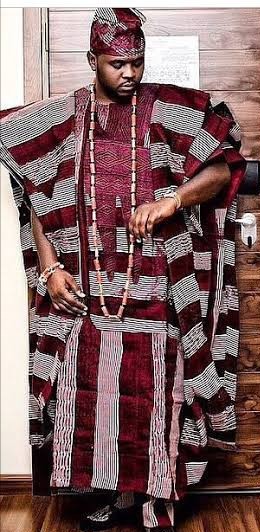
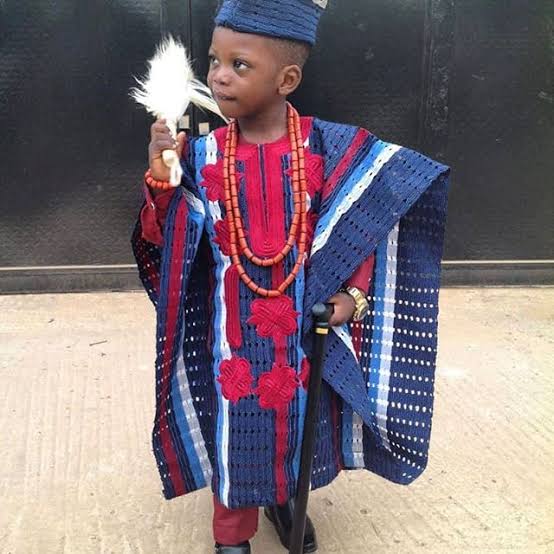
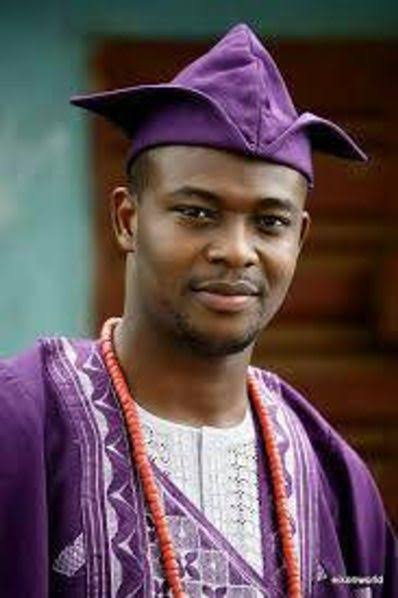
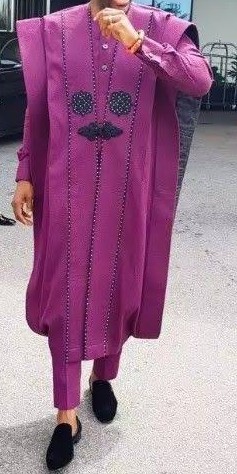
Amidst some cultures in southwestern and Northern part of Nigeria, Agbada is a profound male attire. The name ‘agbada is adopted by the Yorubas located in southwest Nigeria while other regions have their unique names. It is a four-piece attire also worn among the Republic of Benin, West Africa. It consists of a large, free-flowing outer robe. It is worn on top of inner top attire with a pair of long trousers (sokoto) which is always accompanied by a cap (fìla).
Agbada is a big, loose-fitting, ankle-length garment which has a rectangular centerpiece, flanked by wide sleeves. The centerpiece which is usually covered front and back with elaborate embroidery has a neck hole (orun) and big pocket (apo) on the side. Depending on the individual’s financial capacity and preference, the density and extent of the embroidery vary considerably. The length of the agbada also vary : some prefer a full length attire while the contemporary styles are mostly dominated by ankle length attires.
There are two major types of agbada among the Yoruba, namely the casual (agbada iwole) and ceremonial (agbada amurode). Commonly called Sulia or Sapara, the casual agbada is smaller, less voluminous, and often made of light, plain cotton. The Sapara came into being in the 1920s and is named after a Yoruba medical practitioner, Dr. Oguntola Sapara, who felt uncomfortable in the traditional agbada. He therefore asked his tailor not only to reduce the volume and length of his agbada, but also to make it from imported, lightweight cotton. The ceremonial agbada, on the other hand, is bigger, more ornate, and frequently fashioned from expensive and heavier materials.
Beneath the agbada is the undervest called buba by the yorubas. Bubas may either be in form of a loose round-neck shirt with elbow-length or long sleeves or dansiki, a loose, round-neck, sleeveless smock. This is accompanied by the Yoruba trousers, all of which have a drawstring for securing them around the waist. The trousers also come in a variety of shapes and lengths. The two most common trousers for the agbada are sooro, a close-fitting, ankle-length, and narrow-bottomed piece; and kembe, a loose, wide-bottomed one that reaches slightly below the knee, but not as far as the ankle. However, the contemporary trousers are more fitted and of latest fashion.
Different types of caps are worn to complement the agbada of which the most popular is gobi. It is cylindrical in shape which is about ten inches long. When worn, it may be compressed and shaped forward, sideways, or backward. Another very popular style cap is ‘abeti aja’ which literally means “the dog-eared one,” It has a crestlike shape and derives its name from its hanging flaps that may be used to cover the ears in cold weather. Otherwise, the two flaps are turned upward in normal wear. The labankada is a bigger version of the abetiaja, and is worn in such a way as to unveil the contrasting color of the cloth used as underlay for the flaps. Some fashionable men may add an accessory to the agbada outfit in the form of a wraparound (ibora).
Agbada with Abeti aja cap
The largest and most elaborately embroidered is called agbada nla or girike. The most valued fabric for the ceremonial agbada is the traditionally woven cloth popularly called aso ofi (narrow-band weave) or aso oke (northern weave). The term aso oke reflects the fact that the Oyo Yoruba of the grassland to the north introduced this type of fabric to the southern Yoruba. It also hints at the close cultural interaction between the Oyo and their northern neighbors, the Nupe, Hausa, and Fulani from whom the former adopted certain dresses and musical instruments.
Today, Agbada has gained much popularity as a fashionable attire among wide classes of people in West Africa, the African diaspora, and very recently, even among Bantu people in East, Southern and Central Africa. Although It is popularly worn by the Yoruba race in Nigeria, it is not exclusive to the Yoruba, being found in other parts of Africa as well. It is known as mbubb (French, boubou) among the Wolof of Senegambia and as riga among the Hausa and Fulani of the West African savannah from whom the Yoruba adopted it. The general consensus among scholars is that the attire originated in the Middle East and was introduced to Africa by the Berber and Arab merchants from the Maghreb (the Mediterranean coast) and the desert Tuaregs during the trans-Saharan trade that began in the pre-Christian era and lasted until the late nineteenth century.
The Ghanaian President, Nana Addo Dankwa Akufo-Addo had finally announced that tertiary institutions in the country reopen by August 24 for students who are yet to complete the academic year.
Following the shut down of schools due to covid19 pandemic, the Ghanaian President Nana Addo Dankwa Akufo-Addo had finally announced that tertiary institutions in the country reopen by August 24 for students who are yet to complete the academic year.
It should be noted that some institutions like The University of Cape Coast (UCC), the University of Health and Allied Sciences (UHAS), technical universities and some other colleges for instance are yet to complete their academic work for this year as a result of the covid 19 pandemic which led to the indefinite closure of the institutions earlier this year.
In his speech, the president said “After extensive stakeholder consultations, the decision has been taken for continuing students in these tertiary institutions to return to school, on 24th August to finish their academic year.”
However, he noted that the government will ensure that all necessary preventive measures are put in place to allow students resume back to school safely. Akufo-Addo said during his 15th COVID-19 national address that “Government, through the Ministry of Education and the Ghana Education Service, will ensure that all these tertiary institutions are disinfected. Universities will be equipped with necessary personal protective equipment and those with their own hospitals and clinics will have isolation centers to deal with positive cases,” Akufo-Addo added.
The president also said that strict adherence to the basic covid 19 preventive measures such as avoidance of mass gatherings, sporting activities or religious activities on campus will be ensured. Recall that schools in the West African country were closed on March 16, four days after Ghana recorded its first two coronavirus cases. Ghana has since registered 42,532 coronavirus cases as of Sunday, with 231 deaths and 40,362 recoveries.
The initial 45-day mandate of the Justice Ayo Salami-led panel investigating the Suspended Acting Chairman of the Economic and Financial Crimes Commission (EFCC), Mr. Ibrahim Magu, will elapse tomorrow without Magu …
The initial 45-day mandate of the Justice Ayo Salami-led panel investigating the Suspended Acting Chairman of the Economic and Financial Crimes Commission (EFCC), Mr. Ibrahim Magu, will elapse tomorrow without Magu responding to the allegations leveled against him by interested parties that appeared before the panel.
It was gathered last night that Magu was yet to present his defence against the 12-point allegations of financial impropriety levelled against him by the Attorney-General and Minister of Justice, Mr. Abubakar Malami.
Embattled Former Acting EFFC Chairman
The suspended Acting Chairman of EFCC was only served a copy of the terms of reference of the panel 33 days after its inauguration, prompting his lawyers to protest against the unfair treatment meted out to him.
Justice Salami, had in one of the proceedings assured Magu of the determination of the panel to accord him fair hearing.
However, it was also gathered that the panel would continue sitting after the submission of the interim report to President Muhammadu Buhari as contained in the instrument setting up the panel.
“The panel will continue to sit after that. The president says interim report should be submitted to him after 45 days.
“The panel continues sitting on Monday (today) and other issues and complaints would be treated,” a source disclosed this to news authorities.
Magu’s lawyer, Mr. Wahab Shittu, had in a letter accused the Salami-led panel of flouting President Buhari’s directive and the Tribunal of Inquiry Act 2004, the instrument setting up the panel.
The letter written by Shittu also accused the panel of non-adherence to the instrument setting up the panel with regards to private sitting of the panel contrary to the terms of reference which required public sitting.
We use cookies on our website to give you the most relevant experience by remembering your preferences and repeat visits. By clicking “Accept”, you consent to the use of ALL the cookies.
This website uses cookies to improve your experience while you navigate through the website. Out of these, the cookies that are categorized as necessary are stored on your browser as they are essential for the working of basic functionalities of the website. We also use third-party cookies that help us analyze and understand how you use this website. These cookies will be stored in your browser only with your consent. You also have the option to opt-out of these cookies. But opting out of some of these cookies may affect your browsing experience.
Necessary cookies are absolutely essential for the website to function properly. This category only includes cookies that ensures basic functionalities and security features of the website. These cookies do not store any personal information.
Any cookies that may not be particularly necessary for the website to function and is used specifically to collect user personal data via analytics, ads, other embedded contents are termed as non-necessary cookies. It is mandatory to procure user consent prior to running these cookies on your website.