Over 150 hectares of sugarcane fields have been destroyed in Cameroon due to violent clashes between workers at the Société Sucrière du Cameroun (SOSUCAM) and police. The unrest, which erupted earlier …
FIFA has announced the immediate suspension of the Congolese Football Federation (FECOFOOT), following escalating tensions between the Ministry of Sports and the football body. The dispute, which has been ongoing for …
A federal judge has delivered a major blow to President Donald Trump and his ally, billionaire Elon Musk, halting plans to pull thousands of staffers from the U.S. Agency for International …
The Minister of Works and Housing, Mr. Babatunde Fashola, yesterday decried the abuse of honorary degrees by universities in the country, revealing that he turned down 17 offers during his eight-year …
The Minister of Works and Housing, Mr. Babatunde Fashola, yesterday decried the abuse of honorary degrees by universities in the country, revealing that he turned down 17 offers during his eight-year tenure as Lagos State governor between 2007 and 2015.
According to a statement issued yesterday by his Special Adviser on Communications, Mr. Hakeem Bello, the minister made this known when the Committee of Vice-Chancellors/Association of Vice-Chancellors of Nigerian Universities paid him a courtesy visit.
The former governor, who said he stopped the award of honorary degrees in the Lagos State University (LASU), noted that honorary degrees must be conferred on awardees based on merit and not because they occupy political offices or command socio-economic powers.
“We said, look we are going to be different and for two or three years we did not award any Honorary Degree because truly the idea of Honorary Degree is an important building block of society and once we throw those blocks away or make them unviable then the purpose for it is lost.
“In my eight years in office I had 17 offers and I didn’t take one. I told them to wait until when I was out of office and if they still find me worthy they should then come back, and when I was out of office only one came back.
“The point I want to make is that we have to encourage our children to work hard. What have these honorees of the universities done to deserve the honour? What of those who have become undeserving, will you go back and tell them to return the degrees, that they don’t deserve it anymore?”
He also charged the dons on the need to come up with “an acceptable version” of the History of Nigeria.
“There is one thing you can do for Nigeria. Bring all these people together to start work on one acceptable version of Nigeria’s history. It is that version that can be thought in primary and secondary schools, because that is what is happening in other countries. They fought wars too but they have written one final version of their history. When you have written that final version it will be thought in our primary and secondary schools,” the minister added.
Governor Babajide Sanwo-Olu of Lagos State is the Chairman, All Progressives Congress (APC) National Campaign Council for the October 10 governorship poll in Ondo State. He speaks on the council’s plans …
Governor Babajide Sanwo-Olu of Lagos State is the Chairman, All Progressives Congress (APC) National Campaign Council for the October 10 governorship poll in Ondo State. He speaks on the council’s plans for the gubernatorial election, Governor Oluwarotimi Akeredolu’s performance in Ondo State and endorsements of the party’s candidate by all the stakeholders, among others issues during the inauguration of the campaign council in Abuja last Saturday. TEMIDAYO AKINSUYI brings the excerpts:
Lagos State Governor Babajide Sanwo-Olu
How did you see your emergence as the Chairman of the All Progressives Congress (APC) National Campaign Council for the Ondo State governorship election?
I am deeply honoured to be appointed as Chairman of the APC National Campaign Council for Ondo State governorship election, scheduled to hold on October 10. I am sure that the decision by the Chairman of the Caretaker/Extra Ordinary National Convention Planning Committee of our party, Governor Mai Mala Buni and other members must be a difficult one, considering a number of very eminent individuals and highly qualified personalities we have in our party.
It is humbling to lead a team of very experienced women and men who would be working with other colleagues and stakeholders to retain Ondo State in the coming election. This is a moment of personal honour for me, but also of deep personal responsibility. I do not take this lightly and I believe every member of this high level council feels the same way.
How do you see the chances of your party in the governorship poll? And do you think APC’s candidate and incumbent governor; Rotimi Akeredolu has done enough for him to be re-elected?
Today, our great party the All Progressives Congress has begun a march to another victory in Ondo State. I have described this journey as a repeat performance of what we did less than four years ago, when the people of Ondo State filed out in their numbers to elect my brother and friend, Governor Rotimi Akeredolu (Aketi) as their sixth executive governor. The only difference in this years’ experience is that our victory will be a landslide!
Four years ago, the residents of Ondo State affirmed their belief in progressive governance and today, that belief, the validation of our party, the APC as an assemblage of well-spirited Nigerians who are poised to serve the humanity has yielded positive results with several achievements recorded by the Governor Rotimi Akeredolu-led administration. The need for us to do more and because we know that we can do more for the people, is the reason why our party is confident of victory at the polls. The party’s confidence is further buoyed by the giant strides of Governor Akeredolu in different areas of human endeavours.
We know that since APC-led government of Governor Rotimi Akeredolu was sworn in on the February 24, 2017, Ondo has moved from her hitherto parlous state and has returned to a trajectory of growth and development. This is a major feature of our party. We pride ourselves as harbinger of peace, progress and purposeful leadership wherever we have our foothold.
So, you are confident that APC will win Ondo governorship poll?
Yes, the tasks given to us by the APC Caretaker/Extra Ordinary National Convention Planning Committee will be approached with the highest sense of responsibility. We know that the people of Ondo State cannot afford to return to retrogressive life after experiencing progressive governance offered by the All Progressives Congress. Therefore all the 104 members of the APC National Campaign Council for Ondo State Governorship election will roll up our sleeves and work hard for the victory that we truly and genuinely deserve. Let me also use this opportunity on behalf of members of the National Campaign Council, to pledge our commitment, passion and dedication as we take up this national assignment to deliver Ondo State to the APC.
To answer your question directly, we are very confident of victory. No party in Ondo can defeat the APC. The people of Ondo were dissatisfied with Iroko’s eight years of motion without movement so they decided to give the progressives the opportunity and so far, Governor Akeredolu has done very well. He has impacted meaningfully on the lives of the poor masses, the middle class as well as the upper class of Ondo residents. In fact, his sterling performance has made our job a lot easier.
As the chairman of the campaign council that comprised 104 members, what necessitated that large number of campaign council?
The large number of the campaign council is a reflection of how many number of people truly want to serve our party. It is a reflection of how committed our members are and how passionate they are to continue to want to serve the party at the national level. So, when you are called upon like this, I think it is not only a personal honour, it is also an honour for your State that you have been identified and you are willing to serve so as to deliver the election that we believe by the grace of God on October 10, 2020, our brother and friend, Governor Rotimi Akeredolu (SAN) would be returned as the Executive Governor of Ondo State.
You are a first term governor with more than one year in office, why your choice as the chairman of the APC National Campaign Council for the Ondo State governorship poll?
Four years ago, Governor Simon Lalong of Plateau State was appointed as the chairman of the APC National Campaign Council for Ondo State. He was a first term governor and he was a little bit over one year old in office at that time and he did a fantastic job. He was able to uproot the Iroko in Ondo at that time. So history has just repeated itself; he is here standing beside me with a wealth of experience and knowing fully well all the terrains very well. So, it is in the same context that I have also emerged not because I am lacking in number of years as a governor but given the antecedents of what has also happened four years ago and given the pedigree that I am also bringing to the table
Mamman Daura, a nephew and close confidant of President Muhammadu Buhari, has been flown to the United Kingdom for urgent medical treatment over an undisclosed ailment, SaharaReporters has reliably gathered. Daura, …
Mamman Daura, a nephew and close confidant of President Muhammadu Buhari, has been flown to the United Kingdom for urgent medical treatment over an undisclosed ailment, SaharaReporters has reliably gathered.
Daura, 79, was said to have been flown in a private jet to the UK on Wednesday (today) after exhibiting respiratory difficulties with symptoms similar to Coronavirus since last Friday.
The former journalist, who is an integral member of the ‘Cabal’, a group of influential individuals around President Buhari, who help him make key decisions, is said to have had a history of renal crisis and had regularly visited the West for medical attention.
Recall that earlier this month, Daura came under widespread criticisms after he said that zoning of the Presidency in Nigeria should be jettisoned for competence.
Speaking with the BBC Hausa, he said the zoning formula had failed Nigeria and should be abandoned.
In April, another ‘Cabal’ member and late Chief of Staff to President Buhari, Abba Kyari, died from Coronavirus complications.
A key member of the Buhari’s administration, his demise sent panic across Nigeria’s seat of power, forcing drastic safety measures to be adopted to protect the President, who has himself battled an undisclosed ailment and had visited UK several times in recent years for medical attention.
Malawi was called Maravi or ‘reflected light’ back in the days. The country was been addressed as such most likely as a reference to sunlight glittering on Lake Malawi. Early settlements around Lake Malawi, dating back to the late Stone and Iron Ages can be confirmed through Archaeological excavations. This geographical sphere is mentioned in early Arab writings and in Portuguese writings of the 17th and 18th centuries. The pre-colonial Maravi Empire was a loosely organised society covering an expanse of territory well beyond present-day Malawi and encompassed first the Chewa and later the Tumbuka ethnic groups. The Yao from the north and the Ngoni made successful invasions during the 19th century. The Yao became involved in the commercial slave trade, acting as agents for the coastal Arabs. David Livingstone visited Lake Malawi (then called Lake Nyasa) in 1859. British missionaries, traders and planters visited the lake in succeeding decades. Due to the with widespread of slave trade, this period was said to be unsettled.
In 1891, Britain declared the country the British Protectorate of Nyasaland. In 1953 the UK federated Nyasaland with Northern and Southern Rhodesia (now Zambia and Zimbabwe). The Federation was vigorously opposed and, in 1958, Dr Hastings Kamuzu Banda returned home from Ghana, at the invitation of the Nyasaland African Congress, to lead the fight against it. The government declared a state of emergency in 1959 and arrested Banda and other members of Congress. Following his release in 1960, a series of constitutional conferences was held, as were elections. Internal self-government was achieved in 1963, the Federation was dissolved and Malawi attained independence and joined the Commonwealth on 6 July 1964, with Banda as Prime Minister.
Dr Hastings Kamuzu Banda
In 1966 Malawi became a republic, with Banda as President. A new constitution gave the President, who was also commander- in-chief of the armed forces, widespread powers. He held a number of ministerial portfolios, including External Affairs, Agriculture, Justice and Works. Malawi became a one-party state, with Malawi Congress Party (MCP) as the sole party.
The following decade saw widespread political unrest, much of it arising from splits and rivalries. Pressure for democratic reform intensified at the end of the 1980s. The one-party government held out for a period: thousands of arrests were made in the first half of 1992, among those arrested was trade union leader and multiparty democracy campaigner Chakufwa Chihana. Strikes, student demonstrations and political riots were suppressed by police, in the course of which at least 38 people died.
Western donors supported the campaign for multiparty democracy by suspending non-humanitarian aid to Malawi in May 1992. The reformers joined forces in a Public Affairs Committee (PAC) – an umbrella body of religious and political groups calling for change. The Alliance for Democracy (AFORD), chaired by Chihana, and the United Democratic Front (UDF), chaired by Bakili Muluzi, were formed in September 1992 and joined the PAC. The government then established the President’s Committee for Dialogue and agreed to hold an internationally supervised national referendum on the one-party system.
Over 78 per cent of the adult population voted in the referendum on 14 June 1993, and 63 per cent supported a multiparty system. The constitution was accordingly amended. Banda also announced an amnesty for all Malawians imprisoned or exiled for political activities. Laws passed by the National Assembly in November 1993 committed Malawi to human rights including freedom of expression. The Constitution (Amendment) Act introduced a bill of rights, the title of life President (which had been assumed by Banda in 1971) was dropped from the constitution and a number of restrictive laws were repealed.
Presidential and parliamentary elections were held in May 1994. Bakili Muluzi won the presidential election, obtaining about one- third more votes than his nearest rival, Dr Hastings Kamuzu Banda. His party, the UDF, obtained the largest number of seats in the parliamentary elections, but not an overall majority. In September 1994, Muluzi appointed ministers from AFORD and other smaller parties, giving the new government a working majority.
In the elections of June 1999 Muluzi won the presidency with 52 per cent of votes cast while Gwanda Chakuamba – the candidate of an alliance of the MCP and AFORD – secured 45 per cent. In the National Assembly, the UDF won 93 seats, the MCP 66 and AFORD 29, a result that gave the opposition alliance a parliamentary majority. However, by August 1999, with the support of four independents, Muluzi gained control of parliament and his position was subsequently strengthened by a succession of by-election victories. However, the General elections were then held in Malawi on 20th May 2014. This was the first time Malawians voted for their local governments, members of parliament and president in a single election. Times and change are just unavoidable phenomena in human existence. These contribute to the beauty and the whole essence of history.
The creativity of the African fashion is really a great pride; varying from the beautiful colour combination and quality of the material to the end product of the style intended by the designer.
The history of the Ghanaian fashion is still traceable to the period before colonisation. It is worthy of note that the West African country boosts of some of the best fashion in the entire region. In fact, it is in the Ashanti region in Ghana in a village known as Bonwire that the prestigious Ghanaian fabric was discovered. Kente was the most and probably still is one of the most famous of all the African textile cloths. Kente means woven cloth. It was used for beauty adornment and was the perfect choice for kings and chieftains. In modern times, the kente wear is still being used for festivals and other traditional occasions.
The Ghanaian fashion has not always been the way it is today. Kente was the original traditional wear of the Ghanaian people. It was worn on special traditional functions which is why the different colors of the Kente have different meanings even today. In fact, it is believed that the entire Subsaharan fashion owes its progress and development to Ghana. The first aspects of cloth making, though traditional was done in an Ashanti village known as Bonwire. The residents of the village were introduced to the idea of producing the Kente wear which rose to become one of the most notable African cloths. The kente cloth got its name from the term Kenten which means basket. The indigenous Ashanti people referred to the Kente cloth as Nwentoma which means a cloth that is woven. The special cloth was reserved for chiefs and kings. Today, it is still used for special occasions.
The Ghanaian Kente
Ghanaians take a special interest in their dressing and overall grooming. This is probably why their is a lot of creativity in the fashion industry because there is always high demand for something new and fresh. Ghanaians need something cool for the wedding they plan to attend or a great outfit to impress friends on their weekend retreat. Regardless of what the motivation is, finding the right attire is an absolute must. While this may be easy today, it wasn’t as easy as it is now. Taking a look at the history and evolution of fashion in Ghana unveils these facts.
The beginning of the 20th century influenced a lot change in the fashion industry. These changes led to the expansion in production which in turn led to the spread of the Kente to many parts of the country.With increasing demand, designers sought easier ways to produce unique Kente cloth that would be affordable as opposed to the woven cloth that was reserved for the affluent because it was expensive. The current fashion industry began to form in early 2000 when imported fabric from Holland was used to make unique wear. As more people demanded for these unique products, there was increased production which made the designers even more popular that hey became celebrities.
The government embraced the growth in the industry and introduced National Friday wear as means of promoting the African wear. This increased the market base and encouraged more designers to join the industry. Over the years the industry has grown to what it is today. The action of the government is quite commendable and worthy of emulation. The government is responsible for making polices that will promote the culture and tradition of the state. The government policy will also highlight and present the people’s culture to foreigners in a formal way. Therefore giving the policy a good sense of formality and reverence.
The Ghanaian smock
The Ghanaian smock in one of the African traditional wears well appreciated in Ghana. The Ghanaian smock is made from the gonja cloth. The attire have been in existence for as long as the Ghanaian fashion has existed. Smocks are thick and striped cotton made fabrics. This fabric has its origin in Northern Ghana. The cotton is picked, then dyed and carefully dried. The pattern for this cloth is black/blue strips with white interchanging strips. This traditional Ghanaian African wear resembles a shirt and is often worn by men. Modernity has however seen women adopting the smock for functions as well. The Ghanaian smock is also often referred to as dansika, fugu, batakari or gonja cloth. The creativity of the African fashion is really a great pride; varying from the beautiful colour combination and quality of the material to the end product of the style intended by the designer. The African beauty is indeed beautiful!
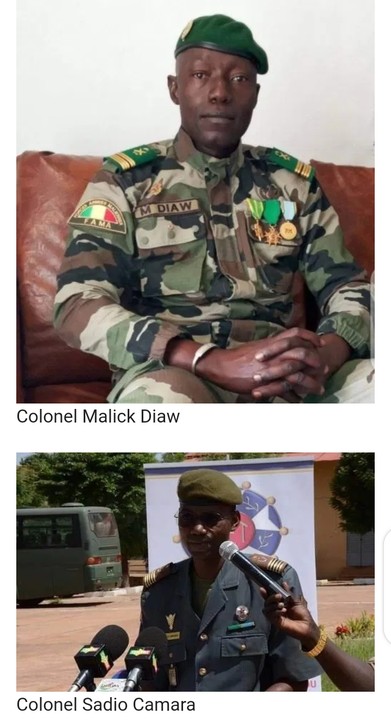
Tuesday’s military coup in Mali that supplanted the government of President Boubacar Keita was led by two colonels: Sadio Camara and Malick Diaw. According to a Malian journalist, Seydou Oumar Traoré, …
According to a Malian journalist, Seydou Oumar Traoré, Camara was the ex-director of the military Prytaneum of Kati who has just returned from training in Russia.
Malick Diaw is the Chief of Staff of the 3rd Military Region of Kati.
Also mentioned was Lieutenant-Colonel Mama Seku Lelenta.
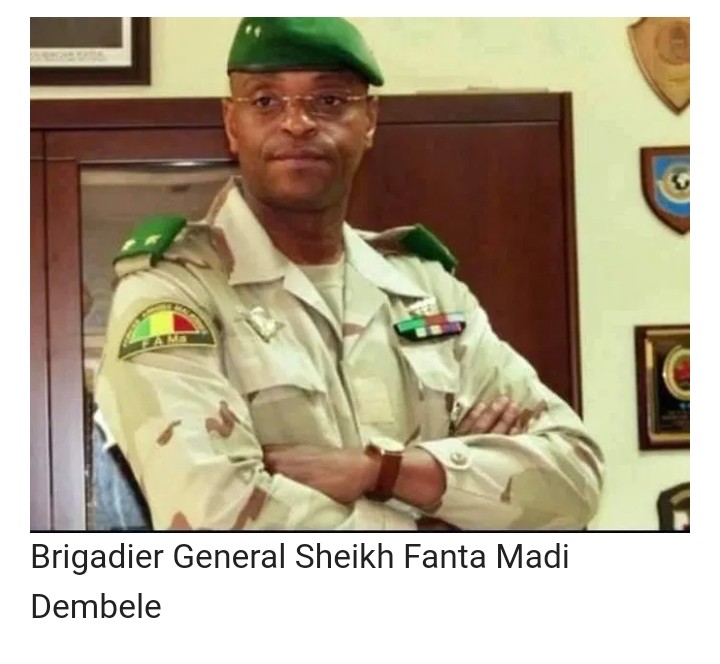
It was not clear how many senior officers were involved in the coup. But Brigadier General Cheick Fanta Mady Dembélé was being mentioned.
What the coup plotters did on Tuesday was to storm Bamako, from their Kati base, to arrest many Malian officials.
Apart from President Boubacar Keita and prime minister Boubou Cisse, many others were also arrested.
Among the people being held are the Chief of Staff of the National Guard and his Administrative and Financial Director (DAF), Abdoulaye Daffé, Minister of the Economy and Finance, and Tiebilé Dramé, Minister of Foreign Affairs.
Also, Moussa Timbine, President of the National Assembly is also in their hands.
FG to move cargo by barges to Onitsha Heads of maritime agencies in Nigeria have agreed to work on modalities for the movement of cargo by barges from Lagos ports to …
Heads of maritime agencies in Nigeria have agreed to work on modalities for the movement of cargo by barges from Lagos ports to Onitsha, in Anambra state so as to ease traffic in Apapa.
Director-General of the Nigerian Maritime Administration and Safety Agency (NIMASA), Dr. Bashir Jamoh, disclosed this at a recent meeting of all heads of maritime agencies in Lagos
Jamoh said the meeting constituted a committee to produce a work plan for the 24-hour port system, and agreed to carry communities around the port environments along in order to ensure safe operations within the port vicinities and beyond.
We also agreed to work with the Nigerian Railway Corporation (NRC) on how movement of cargoes from the ports can be done by rail to reduce the pressure on our roads.
“Our focus is also to ensure containers are moved by barges to dry ports outside the port environments. All these would help in the efficiency and effectiveness of our ports.”
Managing Director of Nigerian Ports Authority (NPA), Hadiza Bala Usman, also emphasised the need for an intermodal transport system in and around the port environments. Usman said Nigeria must prioritise intermodal transportation to reap the benefits of shipping and port activities.
She said the heads of maritime agencies agreed to work with the Nigerian Railway Corporation (NRC) to facilitate movement of cargo from the ports by rail.
Managing Director of National Inland Waterways Authority (NIWA), Dr. George Moghalu, said safety formed a major part of the discussion
The President of Nigeria’s Senate, Dr. Ahmad Lawan has just done what someone with his educational attainment should not do. He is funding the marriage of “300 indigent intending couples” in …
The President of Nigeria’s Senate, Dr. Ahmad Lawan has just done what someone with his educational attainment should not do. He is funding the marriage of “300 indigent intending couples” in his Yobe North senatorial constituency. A statement from his office says that; “beneficiaries must be of marriageable age and with nobody or means at all to finance their wedding.”
Senate President: Dr. Ahmad Lawan
Ahmad Lawan is to pay their dowry and provide them with furniture. This is pittance. It did not cover the field. Where are the couples to live? What are they to eat from day to day? When children come, who will take care of them?
This is a wrong-headed decision. Lawan’s action may look to them and him like a benevolent mission for indigent people of marriageable age. But it is the beginning of the deepening of their misery. All that they will have will be sex followed by a wretched life. Why would Ahmad Lawan, a well-educated man, do this to his own people? If the intention is to keep them down on the floor, then his strategy is right.
But if the idea is to help them become somebody in life, then he has scored zero. This is because marriage is not a job or a profession from which anyone can earn a living. In normal, sensible thinking, you have to have a skill or education and a job that can help you to take care of the financial responsibilities of marriage before you venture into it. You must arrive at that threshold before venturing into marriage.
Marriage is not a profession. Did Dr Ahmad Lawan get married before he had a job? What Lawan has done is the primitive thinking that has been going on in parts of Northern Nigeria to the detriment of the North’s and Nigeria’s development. Some governments and some wealthy persons in some parts of the North sponsor weddings of poor people routinely.
The Kano State Government appears to have made this bad habit an important part of governance. In May 2019, the Kano State Government spent N300 million on the wedding of 1500 couples. In 2018, 1520 couples got this “blessing” from the State government. On August 7 this year, the State Government married off 100 widows and divorced women.
These 100 persons form part of this year’s 1000 persons who are “benefitting” from this year’s mass weddings. This is a very foolish policy because it discourages people from striving to learn a skill or acquire education for employment. It gives the people involved happiness for one day; but uncertainty and misery for the rest of their lives if they are unable to overcome their initial impecuniosity.
To overcome that money-less-ness becomes increasingly difficult when they begin to breed children. Many young people may be blinded by either love or lust and seek to get married. But their eyes are only opened when they begin to grapple with the realities of marriage. They then realize that marriage involves a lot more than acrobatics beneath the sheets; that it involves responsibilities to each other; to their children and even sometimes to family members on both sides of the wedding cake.
Many people rush into marriage even when they are not financially or emotionally ready for it. Some do so because parents push them to give them grandchildren; others marry because their peers have done so or because people are mocking them for being bachelors for too long; for being left on the lurch. These are sentimental expressions which are totally out of the sensible reality that people should get married only when they are, practically speaking, ready for it.
When you get married, your parents are no longer obligated to give you financial support; except they wish to because at that point; you and your wife are expected to be able to build the blocks of a family that will accommodate children when they come. Some people probably think that marriage is a duty that they owe to their parents, themselves and the society. Not really. There are people in the world who don’t feel like getting married because they cannot handle the constraints of the marriage institution. They are entitled to the right to stay single if they wish.
But society generally thinks that marriage leads to societal harmony; the continuation of the human race and the fostering of responsible relationships among persons. Some corporate organizations do not offer highly responsible positions to unmarried persons because there is the presumption, only a presumption, that married persons are more responsible than unmarried persons. Many banks and corporate organizations, leave financial matters only in the hands of people who are married because; they assume, that marriage has a mellowing and moderating impact on people’s otherwise rascally behaviour.
All of these views recommend marriage as a worthy institution that has received societal recognition as a stabilizing agent; despite its imperfections which have led to many break-ups in many families. It benefits, no one should rush into it or be forced into it when the partners are not ready for it. -Despite the magnetic pull of the woman’s femininity or the man’s masculinity; despite the wild pumping of one’s heart for the other’s heart; every person must look before he leaps into marriage.
The reason there is a high level of poverty in Northern Nigeria, much higher than in Southern Nigeria; is the low level of education in the North. Dr. Ahmad Lawan and the other leaders in the North should be crusading for a revolution in education; rather than a revolution in marriage. The culture of sending children only to Koranic schools to the near-neglect of western education is a primitive ideology; one that has kept the North backward. The lack of attention for young people’s education in the North has made them jobless; hewers of wood and drawers of water, okada and Keke riders, maiguard and beggars in many of Nigeria’s cities.
An 8-year-old boy has reportedly been tortured by his aunt for eating N50 groundnut. The incident happened at Anantigha, Calabar South, on Sunday, August 16, when the aunt returned from Sunday …
An 8-year-old boy has reportedly been tortured by his aunt for eating N50 groundnut.
The incident happened at Anantigha, Calabar South, on Sunday, August 16, when the aunt returned from Sunday service to discover that the groundnut was gone.
She questioned the 8-year-old boy about it, then plugged in an electric iron and used it to burn his back and buttocks. When she was done, she refused to give him food. Old scars on the boy’s burnt fingers also revealed that it isn’t the first time she has abused him since he started living with her about three years ago.
Speaking with a correspondent on Monday, August 17, the Principal Counsel, Basic Rights Initiative, James Ibor Esq., said they received a call from Girl Power Initiative, GPI, about a lady who had been assaulting her nephew with hot iron, burning stove and other hot objects.
According to Ibor, she plugged an electric iron and burnt the boys back and buttocks; because he ate the N50 left-over groundnut and that was not the first time that such was happening.
ALSO READ: 11-year-old orphan narrates how she was assaulted by stepfather
He said:
“From what the boy has told us, which is also very visible; he has been tortured and traumatised; and the boy is in serious pains. From here we are taking him to a medical facility where he can get adequate care.
“We have written to the Police and the state Ministry of Humanities and Social Welfare to enable us take good care of him in our own shelter home; because we cannot allow the child to go back to the aunty again.
“We have also invited the father, because the mother is late. Further actions can be taken as he and two of his siblings live with the said aunty.
“It is unfortunate that this kind of dastardly act and injury can be inflicted on a child. Even if he ate the groundnut, there is no justification for this kind of wickedness.”
Nigeria to host maiden Conference of African Speakers and Heads of ParliamentThe Speaker of the House of Representatives, Rep. Femi Gbajabiamila on Monday convened a meeting of some African Speakers of …
Nigeria to host maiden Conference of African Speakers and Heads of Parliament The Speaker of the House of Representatives, Rep. Femi Gbajabiamila on Monday convened a meeting of some African Speakers of Parliaments where it was agreed that there is an urgent need to push for debt cancellation for the continent from their multilateral and bilateral partners. This is as Gbajabiamila’s initiative to establish the Conference of African Speakers and Heads of Parliament (CoSAP), a body that will facilitate increased collaboration between Speakers, Heads of Parliament and National Assemblies across Africa got a boost. The African Speakers will also seek to advance the African development agenda within and outside the continent in conjunction with both the executive arms of government as well as African regional institutions.
These emerged following a virtual meeting conveyed by Gbajabiamila on Monday with Hon. Tagesse Chafo, Speaker, House of Peoples Representatives, Ethiopia; Rt. Hon. Prof. Aaron Mike Oquaye, PhD, Speaker of Parliament, Ghana; Hon. Justin Bedan Muturi, Speaker, National Assembly, Republic of Kenya; Rt. Hon. Donatille Mukabalisa, Speaker, Chamber of Deputies, Rwanda; and President Moustapha Niasse, AFP, President, National Assembly, Senegal. In his opening remarks, Gbajabiamila said there was an urgent need to join local and global efforts to push for the cancellation of the external debt owed by various countries on the continent. Saying that development across the continent has become stunted due to the heavy burden of the debts, Gbajabiamila noted that the outbreak of the coronavirus (COVID-19) has compounded the issue for the continent, considering the socio-political and economic consequences of the disease. “We all agree that Africa’s debt burden has become an existential threat to our societies, our economies and the future; we leave to posterity, and we need to do something about this and treat it as a continent-wide priority. “It is safe to say that the burden of debt servicing, vis-à-vis spending on education and health care for example, is a threat to our continent’s stability and development, especially in the era of Covid-19. “When we find ourselves having to make policy choices between paying debts or saving lives, we know something is not morally right. And as democratically elected representatives of our people, we cannot be silent. We must speak up and we must act. And the time to act is now. “Furthermore, is the need for us to reflect on, the processes that led to Africa’s heavy indebtedness in the first place, the role parliamentarians can play to address this going forward and what assurances we as parliamentarians can give our borrowers that if our debt is cancelled, the freed-up resources will be invested in social and economic development of our citizens. “If we want debt cancellation, we must be able to build the confidence of the borrowers that the cancellation will indeed save lives and livelihoods across the continent, and we, as Speakers and Heads of our parliaments, will ensure that is indeed the case”. On the need for the establishment of the Pan-African Speaker’s Conference, Gbajabiamila noted that collective efforts at tackling challenges facing the continent have become expedient. He said: “The motive behind this initiative is that each year we identify a theme, issue, or challenge that is pan-African in scope and we meet to deliberate on how we can work together across parliaments in Africa to tackle these continental issues and challenges. “As heads of our respective parliamentary entities, it will also be a good platform to share experiences and expertise in different aspects of our legislative duties pertinent to the growth, development and sustenance of our economies and our societies; and on ways to enhance the capacity and impact of our parliaments on our democracies and the lives of the peoples we all represent. “We have spent decades learning from the rest of the world, now we must begin to learn from one another”. Throwing his weight behind the two initiatives, Hon. Tagesse Chafo, Speaker, House of Peoples Representatives, Ethiopia, noted that though almost every government on the continent has been trying to seek debt forgiveness, this should not, however, stop the parliaments from contributing to the efforts through a platform such as this. “As representatives of our people, we are to come together, advise and campaign about the issue, we don’t have to keep quiet because debt cancellation would be good for the resuscitation of our economies that have been ravaged by the COVID-19 pandemic,” he added. In the same vein, Rt. Hon. Prof. Aaron Mike Oquaye, Speaker of Parliament, Ghana noted that the debt burden is essentially a common challenge on the continent, as most African countries have to depend on foreign loans to execute their national budgets. He, however, noted that the Speaker’s group, in its efforts to push for debt cancellation must be able to convince the creditors about accountability if they hope to succeed. He said: “Donor agencies are interested in accountability because they are confounded about the issue of corruption, and we must be able to give the assurance and that is why the Speakers Conference is critical. And if nothing is done, there may be no economy to service the loans” Hon. Justin Bedan Muturi, Speaker, National Assembly, Republic of Kenya also emphasised the need for the initiative, adding that, the coronavirus pandemic has undermined most African economies because conditions attached to most of the loans have been eroded by the consequences of the novel pandemic. On her part, Rt. Hon. Donatille Mukabalisa, Speaker, Chamber of Deputies, Rwanda, while noting that African countries depend on and heavily burdened by loans even before the pandemic, however, added that the group must be clear about the kind of debt it is seeking to address and from which partners. While President Moustapha Niasse, AFP, President, National Assembly, Senegal also regretted that the pandemic has affected all economies on the continent negatively, he, however, suggested that opinions of members of the forum must be sought on how to solve the issues between suspension or cancellation of debt “We must be convinced that we have a job to do at the level of parliament,” he added. It was also agreed that a Communique would be released in the first week of September 2020, while the campaign for implementations of the plan of action would begin in the second week of September 2020 as well. According to the forum, the third week of September would be devoted to the planning for the 2021 conference by the Secretariat. While it was decided that Nigeria would host the maiden edition of CoSAP chaired by Nigerian Speaker the Rt. Hon Femi Gbajabiamila, the new body is expected to meet again in the first week of September to approve the plans and swing into action
We use cookies on our website to give you the most relevant experience by remembering your preferences and repeat visits. By clicking “Accept”, you consent to the use of ALL the cookies.
This website uses cookies to improve your experience while you navigate through the website. Out of these, the cookies that are categorized as necessary are stored on your browser as they are essential for the working of basic functionalities of the website. We also use third-party cookies that help us analyze and understand how you use this website. These cookies will be stored in your browser only with your consent. You also have the option to opt-out of these cookies. But opting out of some of these cookies may affect your browsing experience.
Necessary cookies are absolutely essential for the website to function properly. This category only includes cookies that ensures basic functionalities and security features of the website. These cookies do not store any personal information.
Any cookies that may not be particularly necessary for the website to function and is used specifically to collect user personal data via analytics, ads, other embedded contents are termed as non-necessary cookies. It is mandatory to procure user consent prior to running these cookies on your website.