Over 150 hectares of sugarcane fields have been destroyed in Cameroon due to violent clashes between workers at the Société Sucrière du Cameroun (SOSUCAM) and police. The unrest, which erupted earlier …
FIFA has announced the immediate suspension of the Congolese Football Federation (FECOFOOT), following escalating tensions between the Ministry of Sports and the football body. The dispute, which has been ongoing for …
A federal judge has delivered a major blow to President Donald Trump and his ally, billionaire Elon Musk, halting plans to pull thousands of staffers from the U.S. Agency for International …
PUMA has terminated its four-year contract with the Athletics Federation of Nigeria (AFN). According to PUMA, the termination of the deal was a result of Nigeria’s athletes’ inability to wear the …
PUMA has terminated its four-year contract with the Athletics Federation of Nigeria (AFN).
According to PUMA, the termination of the deal was a result of Nigeria’s athletes’ inability to wear the brand at the ongoing Tokyo 2020 Olympics.
In a letter dated Wednesday, August 4, and signed by the company’s director Manuel Edlheimb, PUMA said it was officially notifying the Athletics Federation of Nigeria of its termination of sponsoring and Licensing Agreement.
“We are referring to the licensing and sponsoring agreement signed between our company and your federation.
“As a direct consequence of the recent developments, particularly at the Tokyo Olympic Games 2020 and pursuant to clauses 9.2 and 7.3 of the Agreement, we hereby terminate the Agreement with immediate effect.
“PUMA especially declares to be discharged from any or all obligations towards all stakeholders involved and reserves all rights against these entities and individuals”.
The Athletics Federation of Nigeria under the leadership of Engr Ibrahim Gusau signed a 4-year contract with PUMA in 2019 and was due to expire in 2022.
Part of the contract is that PUMA will supply kits to all age categories to Nigeria’s Athletics team for four years at no cost.
In addition, gold medalists at the Olympic Games will earn $15,000, silver medalists will get 5,000 while a bronze medal will fetch athletes wearing the PUMA apparel at the games $3000. This means, Ese Brume would have gotten an additional $3000 for winning bronze wearing PUMA kit if the deal was still on.
The termination of the deal comes amidst an alleged leadership tussle between the Ibrahim Gusau-led AFN board and that headed by the Minister for Youths and Sports, Sunday Dare.
The minister is said to have vowed that the Nigerian Athletes will not wear the PUMA kits, stating that the contract is “a subject of a criminal investigation”.
Last year, the Department of State Services cleared Gusau and his vice president Sunday Adeleye over corruption allegations levelled against him by the sports ministry.
Telecommunication companies lost 20.83 million subscribers in the first half of 2021, according to industry statistics released recently by the Nigerian Communications Commission. Using the industry Average Revenue Per User of …
Telecommunication companies lost 20.83 million subscribers in the first half of 2021, according to industry statistics released recently by the Nigerian Communications Commission.
Using the industry Average Revenue Per User of N1,420 for 2020, as stated by the Association of Telecommunications Companies of Nigeria, revenue lost over that time period was N17.88bn.
Total number of subscribers fell from 187,275,547 in January 2021 to 187,275,547 in June 2021.
MTN lost 5,464,322 subscribers. Globacom lost 4,463,962 while Airtel lost 2,759,506 subscribers in the first half of the year.
Collectively, the telcos lost 11.08 million data subscribers so far this year as the number of data subscribers fell from 150,898,122 in January 2021 to 139,814,913 in June 2021.
In December 2020, the Federal Government banned the sale of new SIM cards because of a directive to link National Identity Numbers with SIM cards.
Since then, telcos have been losing subscribers. However, since the FG recently lifted the ban on SIM card sales, subscriber base has begun to grow again.
Two former soldiers of the Nigerian Army, Chilaka Ifeanyi and Victor Aduba, on Tuesday, denied being accomplices to the crimes of alleged kidnap kingpin, Chukwudimeme Onwuamadike alias Evans. The News Agency …
Two former soldiers of the Nigerian Army, Chilaka Ifeanyi and Victor Aduba, on Tuesday, denied being accomplices to the crimes of alleged kidnap kingpin, Chukwudimeme Onwuamadike alias Evans.
The News Agency of Nigeria (NAN) reports that Ifeanyi and Aduba made the denials during the resumption of their trial at an Ikeja High Court over two counts of kidnapping and conspiracy.
The ex-soldiers, who had earlier been dismissed by the Nigerian Army, are facing trial alongside Evans, Uche Amadi, Okwuchukwu Nwachukwu and Ogechi Uchechukwu for the alleged kidnap of Mr Donatius Dunu, the Chief Executive Officer of Maydon Pharmaceuticals.
Ifeanyi, led in evidence by defence counsel, Mr A.A Uzoukwu, said he was acquainted with Aduba and had worked with him as a soldier.
He said one day, he was requested by another acquaintance, Mr Ikenna Chukwuma, to help him drive a car from a mechanic’s workshop at Ijesha, Lagos to Surulere, Lagos.
He told the court that when they got to the mechanic’s workshop, the car had not been repaired and Chukwuma had called a friend to pick them up from the workshop.
“When I entered the vehicle with Chukwuma, I saw Mr Victor Aduba (sixth defendant) in the vehicle and there was a weapon inside the vehicle.
“When I asked what the weapon was doing there, the driver told me to keep quiet and mind my business.
“I was asked if I know what is AP and I said no, then I was told to keep quiet and mind my business.
“My Lord, they did not carry anybody in that vehicle and they did not kidnap anybody. Reaching Cele Bus stop, I told them I was uncomfortable and asked to alight.
“I was dropped off at Cele Bus stop and they warned that if they heard anything from me, they would kill me and I went back home,” Ifeanyi said.
Responding to questions from Evans’ defence counsel, Mr Victor Okpara, Chilaka said he did not know Evans, and met him for the first time in police custody.
“I have never taken part in any kidnap activities in my life. I have never attempted to kidnap anyone before or conspired with Evans to kidnap the victim (Dunu),” he said.
Under cross-examination by the lead prosecutor, Mr Adebayo Haroun, Chilaka said it was a locally made weapon he saw in the vehicle and he did not know the reason why he was warned not to reveal what transpired.
The second ex-soldier, Aduba, denied partaking in kidnapping with Evans and the other co-defendants.
He alleged that he was tortured into admitting to the crimes by members of the Intelligence Response Team (IRT) of the Nigerian Police Force.
Led in evidence by his counsel, Mr Emmanuel Ochai, Aduba said he was invited by an acquaintance, Mr Chukwuma Nwosu to a bar in Ago, Lagos but unknown to him, Nwosu was wanted by the police.
“As I reached the bar, he (Nwosu) was acting unusual and I kept asking what was wrong with him, and then I noticed five policemen who approached me and said I was under arrest.
“I resisted and they overpowered me and when I got to the police station, one Mr Philip their boss said I should cooperate with them and do whatever they say I should do.
“I told them they should allow me to go to my office where I worked as a soldier but they refused,” he said.
Aduba said that he was ordered by a member of IRT, Insp. Idowu Haruna, to sign a written statement admitting to the crime but he refused.
He alleged he was ordered to be taken to a “theatre” by Mr Phillip where he was beaten and was cut with a machete by Haruna.
Aduba showed his alleged machete injury to the court during his testimony.
He alleged that in the days he was in custody, three men; Felix Chinemeren, Paul Samyan and Chukwuma Nwosu, who were initially paraded to the media as kidnappers, were extra-judicially killed by the IRT team.
“I was still being told to sign some papers but I refused and I said if I refuse I will travel (slang for killed). At that point Idowu Haruna brought out his phone for me to look at some pictures.
“When I looked at it, I discovered it was the dead bodies of the three men with whom I was in custody. That was how I was forced to sign the papers,” he said.
To corroborate his claims, Ochai, Aduba’s counsel, tendered to the court, a record of court proceedings of a kidnap trial held on November 5, 2018 before Justice Oluwatoyin Taiwo.
In the records of proceedings, Haruna had in his testimony, admitted that the three deceased had died in police custody.
Aduba in his evidence vehemently denied working with Evans.
“On February 14, 2017 (the day of Dunu’s kidnap), I was on 24-hour duty at Abati Barracks gate. I even told Insp. Idowu Haruna to check out my alibi but he said it was none of his business.
“I have never conspired with anybody neither have I gone with anybody to kidnap anyone,” he said.
While being cross-examined by Haroun, Aduba said he was enlisted by the Nigerian Army on August 15, 2009 and had known Ifeanyi since 2010.
He described Ifeanyi’s evidence that he conveyed him in a vehicle with a locally made weapon as “a fabricated story”.
Aduba denied Haroun’s allegations that he was one of the soldiers who Evans had in a recorded confession, admitting to being members of his gang.
Haroun also noted that in the records of proceedings of Justice Oluwatoyin Taiwo, Haruna in his evidence never said he travelled (killed) anyone in his custody.
The prosecutor noted that Haruna had in his evidence said that the three men had died in the custody of the police at Ikorodu General Hospital.
Responding to questions from the prosecution, Aduba said he was never dismissed by the Nigerian Army over allegations of kidnapping.
“The charges against me by the military was that I was AWOL. I was never given the chance to challenge my dismissal by the army,” he said.
Justice Hakeem Oshodi adjourned the case until November 5 for adoption of final written addresses.
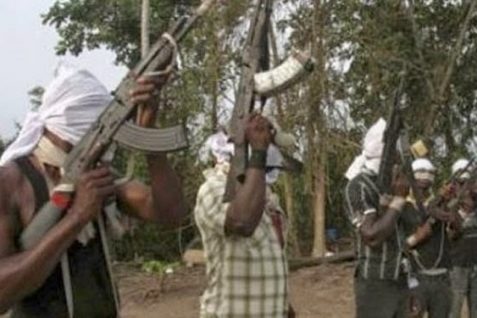
Ibese community in Yewa North Local Government Area of Ogun State, was on Tuesday, thrown into confusion as Hausas and Yorubas motorcyclists engaged themselves in a clash. Nigerian Tribune learnt that …
Ibese community in Yewa North Local Government Area of Ogun State, was on Tuesday, thrown into confusion as Hausas and Yorubas motorcyclists engaged themselves in a clash.
Nigerian Tribune learnt that the skirmishes which started on Monday snowballed into a crisis between them and was reported to have been bloody.
The motorcyclists, said to be operating at Dangote Cement factory junction, were said to be fighting over an increase in daily ticket fees from N600 to N800.
It was gathered that no fewer than seven persons were feared dead in the crisis said to have been turned to an ethnic one.
However, the State Police Public Relations Officer, Abimbola Oyeyemi, in an interview with newsmen, could not confirm the number of casualties involved in the crisis.
He assured that the Command is on top of the situation and urged residents to go about their normal businesses.
Oyeyemi, the Deputy Superintendent of Police said, “The issue is currently under control. It was a minor struggle that had snowballed into a serious crisis.”
A middle-aged lady has demanded justice for her father, Solomon Nwagbara, who she said was burnt to death by suspected members of a disbanded vigilance group in Omudioga community, in the …
A middle-aged lady has demanded justice for her father, Solomon Nwagbara, who she said was burnt to death by suspected members of a disbanded vigilance group in Omudioga community, in the Emuoha Local Government Area of Rivers State.
The lady, who spoke on condition of anonymity, told newsmen in Port Harcourt that she and her siblings fled the area in fear for their lives.
She also claimed that those who perpetrated the act kidnapped her mother, Priscilia, pointing out that the latter’s whereabouts was unknown.
She called on the government and security agencies to help find her mother.
The lady said her late father, who was suffering from a stroke, was a chief in the community, while her mother was a woman leader.
She insisted that her parents had nothing to do with cultism.
She said, “We got a call on Tuesday evening that our parents were in hiding. After a while, we called back their telephone lines, which did not go through.
“On Wednesday, we called and their telephone lines did not go through again. We went to their house on Thursday to find out what happened.
“When we got there, we saw the burnt remains of my dad there. The whole house was razed; my mother was nowhere to be found. Not even her body, like we saw her husband’s body.
“So, we have put him (late father) in a morgue; we are now looking for my mum. Let the police please help us comb the bushes and find my mother.
A spokesman for the Rivers State Police Command, Nnamdi Omoni, said he had yet to get a report on the incident, but promised to find out from the Divisional Police Officer in the area.
He had yet to do so as of the time of filing this report.
The United Arab Emirates says the holiday for the Islamic New Year (Hijri 1443) will be on Thursday, August 12. This was contained in a tweet by the Federal Authority for …
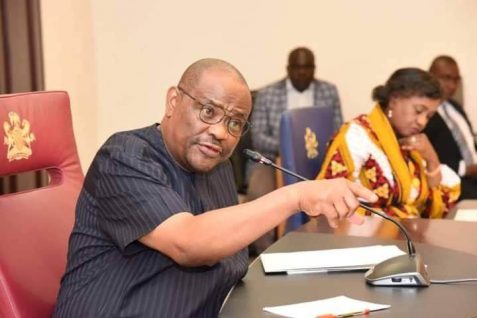
Governor of Rivers State, Nyesom Wike, says the rejection of electronic transmission of election results by All Progressives Congress (APC) members in the National Assembly, is tantamount to a coup against …
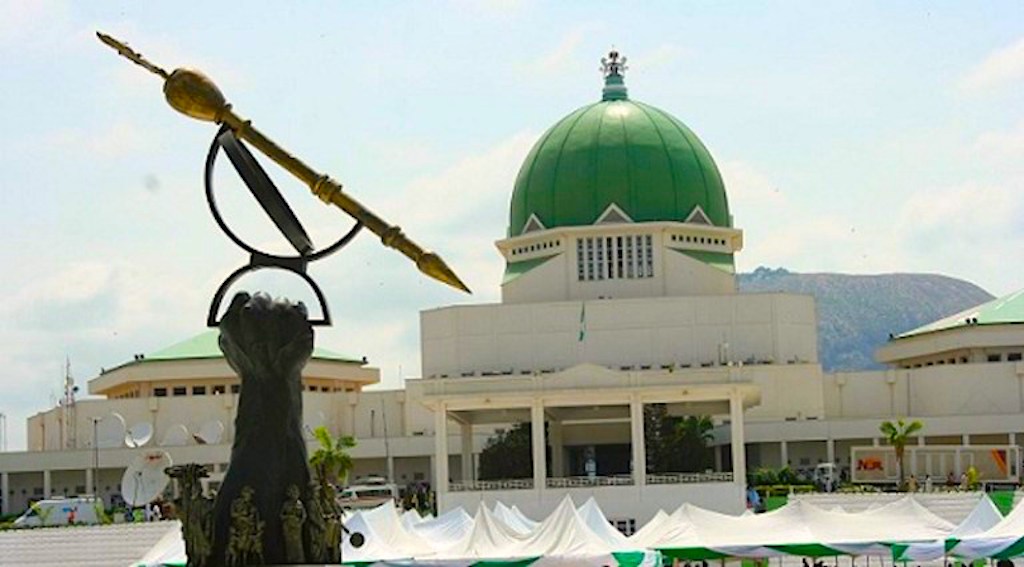
Governor of Rivers State, Nyesom Wike, says the rejection of electronic transmission of election results by All Progressives Congress (APC) members in the National Assembly, is tantamount to a coup against Nigerians desirous of a free, fair and credible election.
The governor noted that President Muhammad Buhari’s failure to prevail on APC members in the National Assembly to support the inclusion of electronic transmission of election results in the amended Electoral Acts proves he does not intend to leave a legacy of a transparent electoral process.
He stated this during the official presentation of the letter of nomination to him as “the 2020 Governor of the Year Award” by the management of the Leadership Media Group at the Government House, Port Harcourt, on Tuesday.
He remarked that the current National Assembly capitalised on the seeming political indifference of Nigerians to deliberately vote against the inclusion of electronic transmission of election results in the amended Electoral Act.
Wike described National Assembly members who voted against transmission of election results electronically as enemies of the country because their action is detrimental to the growth and consolidation of the country’s democracy.
The governor said; “Those who voted against e-transmission of results should be ashamed of themselves. They never mean well for this country. If you are a member of the National Assembly and you voted against electronic transmission of results, your children should call you and say daddy, are you well?
“I can’t believe anybody who went to school in this digital period, will vote against electronic transmission of results. What kind of country is this? What kind of National Assembly members do we have?”
He declared that the rejection of electronic transmission of election results by APC lawmakers, even when the Independent National Electoral Commission (INEC) had affirmed that it has the capacity to electronically transmit results, is tantamount to a coup against the citizens of the country.
“It is a coup against the people, and when you plot a coup, you know the consequences of plotting a coup. National Assembly members have plotted coups against Nigerians and Nigerians should hold them responsible. All they are planning is to rig election because they know Nigerians have abandoned them,” he said.
The Rivers State governor added he had expected President Buhari, who had openly declared that he respects former President Goodluck Jonathan, for not compromising the 2015 general elections, to build on the electoral legacy of his predecessor.
“If Jonathan did not believe in the transparency of the election, he would not have allowed card reader to be used. So, he introduced the card reader as a sitting President, knowing fully well that that could be an albatross to him. But he said no, I want us to move to the next level.”
Governor Wike stated that though President Buhari had repeatedly declared that he will ensure the conduct of a free, fair and credible election in 2023, he doubts his sincerity, particularly, for failing to rein in those APC members who voted against electronic transmission of the election results.
“Mr President cannot tell us that sincerely he wants to conduct a free, fair, credible election. Let nobody deceive you. It is very clear that there is no sure intention at all.”
The governor, who stated that he has never and will never influence any media organisation to nominate him for an award, advised media groups against bestowing awards on non-performing political officeholders. According to him, giving the award to an undeserving governor, for instance, is an act of corruption.
Although there could still be some nostalgic feelings in certain quarters about Nigeria”s failings in the journey to optimising its economic and industrial potential as a leading crude oil producer in the …
Although there could still be some nostalgic feelings in certain quarters about Nigeria”s failings in the journey to optimising its economic and industrial potential as a leading crude oil producer in the world, no one can really discountenance the genuine efforts by some government agencies to enlist it in the league of countries smarting in global competitiveness.
With growth prospects and natural resources unrivaled by most countries at independence in 1960, expectations of Nigeria emerging a global economic powerhouse in the mould of the Asian Tigers was so overwhelming that no one doubted the probability of the country becoming a black superpower.
But all those dreams were shatered very early in history when massive importation of manufactured goods and high level official corruption became the order of the day, leaving the lofty dreams of greatness to become a mirage as successive administrations failed to pursue set developments targets amid rising official corruption.
As an economy entangled in the paradox of “Dutch Disease”, a shorthand way for describing a situation that pervades a nation when the burst of good news or developments like fresh hydrocarbon finds, harms its broader economic objective, things began to fall apart.
It began with an avalanche of foreign capital inflow targeting to exploit the newfound resource that later left the people without a strategic vision for sustainable development of the economy.
For Nigeria, this paradox of Dutch Disease lived with the people for many years from the commercial discovery of oil in the Niger Delta.
With massive global investment coming into the secor in the sector, Nigerian government and its private sectors operators neglected agriculture and other activities in the real sector and left the economy vulnerable and largely dependent on imported goods and services.
It was therefore not surprising that the nation’s financial sector regulators began thinking out of the box to create policies to rescue the economy from self destruction through its overwhelming dependency on imported goods.
From available information, the decision of the CBN in June of 2015, to restrict foreign currency access to companies for the import 41 categories of items to stop a slide of the naira was a deliberate effort to strengthen the Small and Medium Enterprises sector by empowering them to takeover the production of goods and services under the 41 items listed as not valid for foreign exchange.
The ban was part of a long-term plan by President Muhammadu Buhari to encourage local manufacturing, amid risk of pushing the economy into recession after growth declined in the second quarter of that year as foreign reserve will now be utilised strictly for diversification of the economy, rather than encouraging more dependence on foreign food import bills.
Following the implemention of the policy in 2015, Nigeria’s total import according to reports by the National Bureau of Statistics began declining with the value of imported products dropping to $52.33 billion, from the $61.54 billion spent on imports in 2014.
Also in 2016, Nigerians imported foreign goods worth $35.24 billion into the country, representing a decline of 32.7 per cent from the total amount imported in 2015 ($52.33 billion).
Simultanously, CBN’s investment in domestic rice production ballooned local production through the Anchor Borrower Scheme amid criticism for not taking the low capacity of local farmers into consideration.
Not withstanding these distractions, the apex bank’s policies in these direction created ample opportunities for most SMEs to expand their capacities in the realisation that they remain the engine room of developing economies.
In 2015, Nigeria spent nearly $2.9billion (£2.4bn) and by 2017 that had risen to $4.1billion, According to the NBS.
Nigeria’s total import as at the end of 4th Quarter of 2015 was N1,576.4 billion, coRefined Petroleum – $10 billion, Wheat – $1.6 billion, Non-fillet Frozen Fish – $641 million, Rubber Tires – $393 million, Raw Sugar – $384 million.
However, taking crucial lessons from other emerging economies that built modern economies on the Small and Medium Enterprises sector, CBN in keeping with its mandate of maintaining price and exchange rate stability also intervened massively in agricultural sector by according due recognition to the SMEs and MSMEs sub-sectors through the provision of working capital and other forms of credit facilities to revitalise the operations of moribund entities and inject fresh capital into green field projects with expansive job creation capacity.
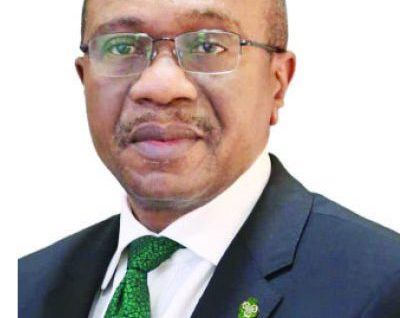
One can say without fear of contradiction that the Central Bank of Nigeria (CBN) as banker to the Federal Government and its chief Economic aggregator has in the last six years of Mr Godwin Emefiele, as Governor pursued policies targeted at lifting the SMEs sector to a place of prominence, where its contribution to the nation’s GDP can be substantially be enhanced.
Some of its policy packages for the sector include the rejuvenation of N220billion Micro, Small and Medium Enterprises Development Fund, where 60 percent of its intervention fund was reserved for women entrepreneurs and the N1trillion funding programmes being implemented for the Real Sector Support Fund to boost local manufacturing, comprising 44 Greenfield and Brownfield projects for which over N93.2 billion had already been disbursed to deserving entities.
A cursory review of some of these initiatives reveals they were being implemented in a manner that prepares the economy to withstand the frequent global economic shocks and headwinds that often hobble Nigeria’s economy any time there crashes in commodity prices.
Many have often wondered how the Nigerian economy was able to survive difficult times like the global financial crises of the 2006-2008 which triggered commodity price crashes that plunged many nations into tumultuous recession. That also included the recent COVID-19 headwinds that almost crippled the global economy.
But some economic experts who spoke to Daily Sun, attributed these survival instincts to the promptness of the Emefiele led CBN intervention policies like the N50 billion SMEs Targeted Credit Facility meant to cushion the impact of the COVID-19 on the economy, stressing that the consequences of the pandemic could have been far worse without the interventions.
Available records show that as at end of June, 2020, the CBN had disbursed N49 billion to businesses and households. A break down of the Targeted Credit Facility showed that about 80,000 operators of micro, small and medium scale enterprises (MSMEs) and thousands of families across the country benefitted from the intervention fund.
He said the fund was meant to support the Federal Government’s efforts to stimulate economic activities as well as help the economy avert a looming recession.
“So far, out of the N50 billion targeted credit facility for households and small businesses, we have disbursed about N49 billion. We also have other intervention funds such as the N100 billion healthcare facility, currently bring disbursed as well,” said the CBN spokesman
The scheme being financed from the CBN’s N220 billion Micro, Small and Medium Enterprises Development Fund (MSMEDF) and had earmarked about N25 million for MSMEs with benefiting households being allocated up to N3 million each based on the activity, cashflow and industry/segment size of each beneficiary.
Speaking last month while delivering the 51st University of Lagos convocation lecture, Governor Emefiele,said the bank will increase its development finance imprint to further support start-ups and Small and Medium Enterprises (SMEs) in the country.
In the lecture themed, “National Development and Knowledge Economy in the Digital Age: Leapfrogging SMEs in the 21st Century”, the CBN boss observed that increased access to finance for start-ups and SMEs was essential for the nation’s economy to grow.
He advocated that special consideration be given to the strengthening of physical and ICT infrastructure, to enable SMEs perform more efficiently and become globally competitive.
“The potential of SMEs in enhancing economic growth is hampered by limited access to finance, inadequate infrastructure and poor digital penetration.
“I urge government and the private sector to provide more support in addressing the challenges of SMEs in the country.
“Specifically, as users of new technology, I advise that policies that would incentivise the adoption of innovations that will improve SMEs competitiveness and productivity should be made,” he said.
Emefiele also called for reforms to improve human capital development through skills enhancement and proper linkage of research to the SMEs.
On July 22, 2020, the Nigeria Youth Investment Fund scheme, a N75billion 3 year intervention program designed to cater for Youths owned investments and businesses was approved by the Federal Executive Council. The NYIF is a N75 billion Naira 3-years programme created to cater for Youth-owned investments and businesses.
Commenting on the impact of the CBN intervention funding in the economy, renowned Capital Market Professor and President of the Association of Capital Market Academics of Nigeria, Professor Uche Uwaleke, in his assessment of intervention programme of the CBN said “ I would say that these interventions the CBN came up with were responsible for the quick exit of the predicted and eventual fall into the 2020 recession brought on by the COVID-19 lockdown, global supply chain disruptions and crashed crude oil prices.
The apex bank has consistently supported various ailing sectors of the economy, especially the Small and Medium Enterprises (SMEs) via intervention programmes, to realise its economic sustainability and diversification goal. Although the current administration have not yet gotten everything right, the way and manner of response by the CBN has been commendable.”
According to university don, “If you look at what happened last year when the COVID-19 pandemic happened, the CBN gave a one-year extension of a moratorium on principal repayments for its intervention facilities.”
Others laudable strategies it had so far adopted to maintain economic resilience include strengthening of the Loan to Deposit Ratio policy, which has resulted in a significant rise in loans provided by financial institutions to banking customers.
He recalled that Loans given to the private sector have risen by over 21 percent in the past year, even as the CBN engaged in other development financing activities to address the credit needs of sectors critical to improving livelihoods, reducing poverty, and promoting inclusive growth.
“I believe that the overall objective of these interventions is to promote financial inclusion in the country, tackle unemployment, insecurity and other social challenges.” Uwaleke said.
For her part, Lagos Chairman, Nigeria Association of Small Scale Industries NASSI, Gertrude Akhimien, admits that CBN initiative has been helpful, despite challenges facing its implementation.
“I believe that the overall objective of these interventions is to promote financial inclusion in the country, tackle unemployment, insecurity and other social challenges. “The idea of providing funding to SMEs to carry out their businesses had been lacking for years, as conventional banks seem not willing to provide them loans without collaterals and other requirements. So the CBN intervention funding has become a game changer “ she argued
“At the start it was easy but with time, some bottlenecks set it. For the past two years now and with the setting in of the COVID -19, there has been some inexplicable delays in releasing funds for SMEs that applied.”
There is a back log of SMEs still awaiting funds to be realised to them and do the CBN needs to review the process of accessing these funds so that overall objective would be achieved. As for the idea as demonstrated concept of intervention funding, it is an excellent one. I commend the CBN governor for this beautiful initiative.” This is something that we recommended about years ago, but it has not been implemented.
The NASSI boss said the Emefiele led apex bank was doing a good job, but advised that the implementation of it’s policies needs to be fast tracked for better results. According to her, frequent reviews of its policies will enable it to identify areas of problems regarding access to these fund even as noted that the percentage of impact is still pretty low, hence the need for a review. “Look at the system, implementation process and see where they can be corrected, i believe the impact will be higher,” she concluded.
Also commenting, Mr Chidi Ajaegbu, CEO, Heritage Capital Markets Ltd called for a verification of those getting the intervention funding, arguing that setting up an independent body or credible third party certification or validation of this interventions would go a long way to correcting some of the wrong perceptions some people are having about the funding programmes.
THE nationwide strike by resident doctors went ahead on Monday as planned with a warning from the National Association of Resident Doctors that the industrial action would be total. Activities in …
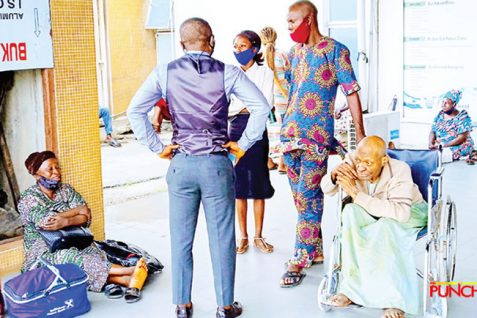
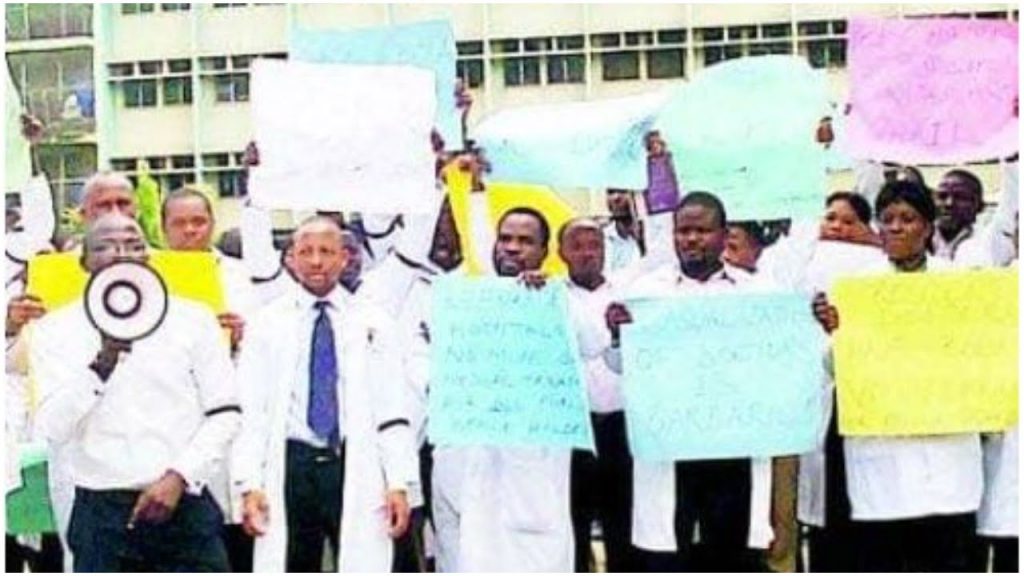
THE nationwide strike by resident doctors went ahead on Monday as planned with a warning from the National Association of Resident Doctors that the industrial action would be total.
Activities in most hospitals across the country were paralysed, just as NARD vowed that it would not call off the strike until its demands were met.
Some patients were stranded particularly in some Abuja hospitals as a result of the strike.
The President of the association, Uyilawa Okhuaihesuyi, who spoke in an interview withour source, said the Federal Government had yet to reach out to the doctors on their demands.
Okhuaihesuyi had on Saturday in Umuahia after the Annual General Meeting of the association’s National Executive Council announced that members would be embarking on an indefinite strike.
Some of the issues raised include the inconsistent payment of salaries, hazard allowances, non-payment of death benefits and issues surrounding registration of members on the Integrated Payroll and Personnel Information System.
There was a mild drama at the Federal High Court Abuja on Monday. The lawyer representing the 12 detained aides of Sunday Igboho, Pelumi Olajengbesi, has condemned the harassment of journalists …
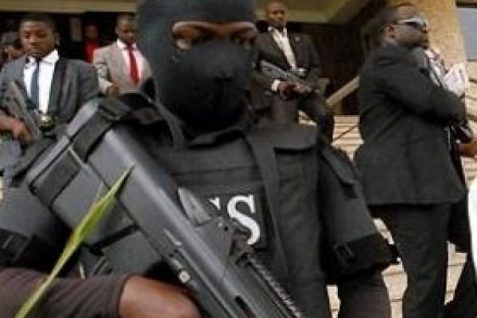
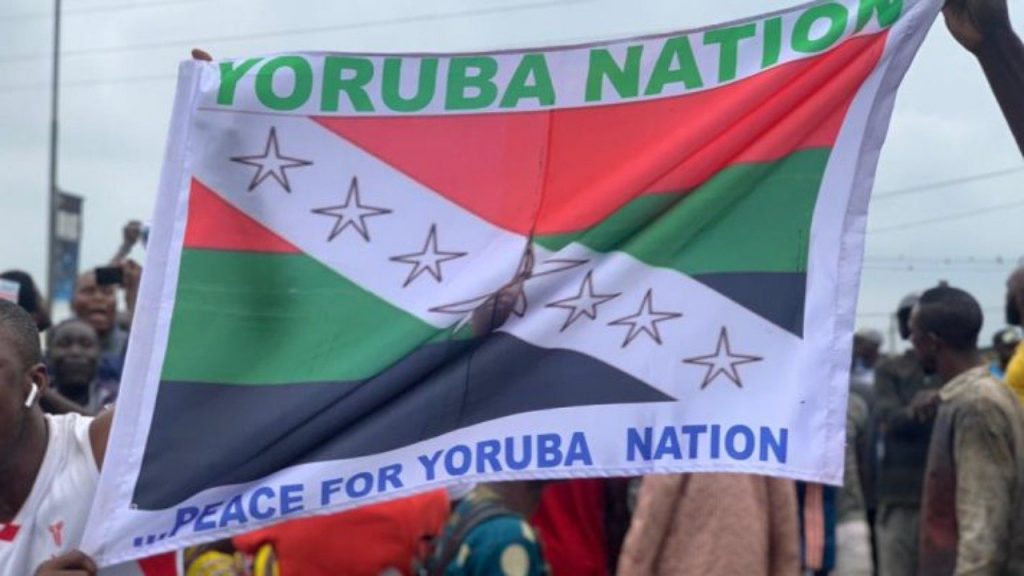
There was a mild drama at the Federal High Court Abuja on Monday. The lawyer representing the 12 detained aides of Sunday Igboho, Pelumi Olajengbesi, has condemned the harassment of journalists at the Federal High Court, Abuja on Monday.
Olajengbesi expressed his displeasure in a statement titled, ‘SSS harassment of journalists in court premises’ issued on Monday after the suit by the detained Igboho’s aides came up in court.
The confusion arose when the court sought to ascertain the identities of those that were produced and those that were not produced in court by the Department of State Services.
When the matter came up before Justice Obiora Egwuatu, the DSS only produced eight of the detained Igbobo’s aides in court. The produced aides consisted of seven males and one female.
Recall that earlier reports has it that Justice Egwuatu had ordered the DSS to produce all the 12 detained aides.
However, at the last adjourned date when the DSS failed to produce them in court, the DSS lawyer, I. Awo, had told the court that some of the names on the court order were different from the names of the persons they had arrested on July 1, 2021 at Igboho’s house.
On Monday, the lawyer for the detained aides, Pelumi Olajengbesi, applied to the court for leave to amend his processes before the court to reflect their correct names.
Counsel to the DSS, I. Awo, did not oppose the application for leave to amend the processes..
We use cookies on our website to give you the most relevant experience by remembering your preferences and repeat visits. By clicking “Accept”, you consent to the use of ALL the cookies.
This website uses cookies to improve your experience while you navigate through the website. Out of these, the cookies that are categorized as necessary are stored on your browser as they are essential for the working of basic functionalities of the website. We also use third-party cookies that help us analyze and understand how you use this website. These cookies will be stored in your browser only with your consent. You also have the option to opt-out of these cookies. But opting out of some of these cookies may affect your browsing experience.
Necessary cookies are absolutely essential for the website to function properly. This category only includes cookies that ensures basic functionalities and security features of the website. These cookies do not store any personal information.
Any cookies that may not be particularly necessary for the website to function and is used specifically to collect user personal data via analytics, ads, other embedded contents are termed as non-necessary cookies. It is mandatory to procure user consent prior to running these cookies on your website.