

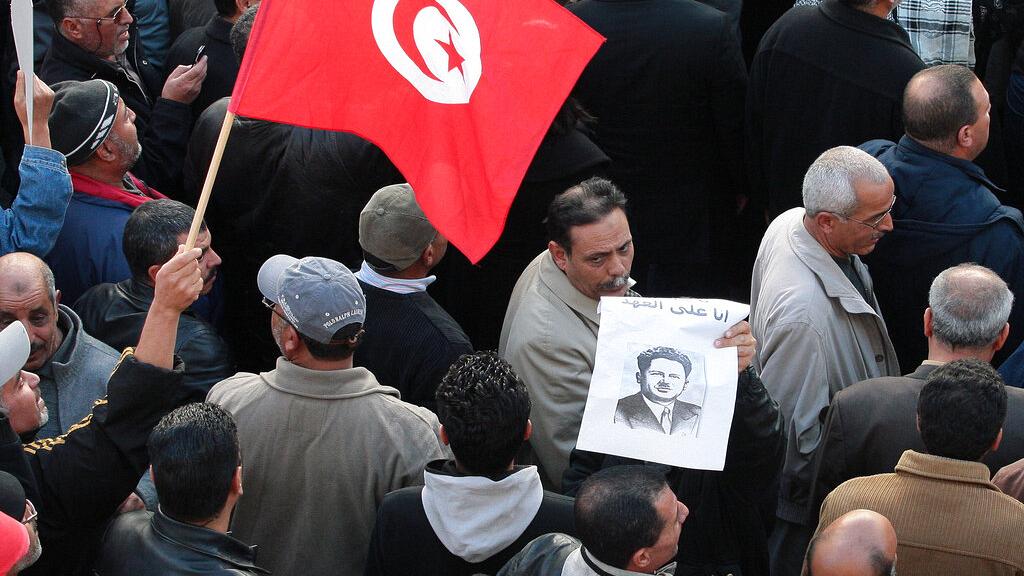
The powerful Tunisian trade union centre UGTT on Tuesday announced a nationwide public sector strike on June 16 to protest against soaring inflation and prevent the privatisation of major state-owned companies.
The announcement comes at a time when the country is wallowing in a deep economic crisis and the government is counting on the support of the General Union of Tunisian Workers (UGTT) for the reform programme it has submitted to the International Monetary Fund (IMF) in the hope of obtaining new credit.
In its statement, the union accused President Kais Saied of “undermining the principles of negotiation and reneging on previous agreements”, while the country is facing “crazy and continuous price rises”, with inflation at 7.5% in April (over one year).
“All the staff” of the 159 institutions and public enterprises will stop work in order to obtain “immediate negotiations to restore the purchasing power of Tunisians”, the UGTT said in a statement.
The union is asking for “guarantees” that public companies, many of which are monopolies (cereal office, electricity, fuel, phosphates, etc.), will not be privatized.
The government has submitted a reform plan to the IMF that includes a freeze on the civil service wage bill, a gradual reduction of some state subsidies and restructuring of state-owned enterprises.
However, the IMF wants these promises to be supported by the social partners, including the UGTT, to ensure their implementation.
Tunisia, shaken by a deep political crisis after President Saied’s July 25 coup, is asking for about $4 billion in aid, the third in 10 years for the country that was the birthplace of the Arab Spring.
On Monday, the rating agency Fitch deplored that tensions between the government and the UGTT were holding up negotiations with the IMF, saying it was “very difficult” to “adopt political and economic reforms without the support of the UGTT”.
Last week, the UGTT announced its refusal to participate in a “national dialogue” process launched by Mr. Saied, which excludes political parties.