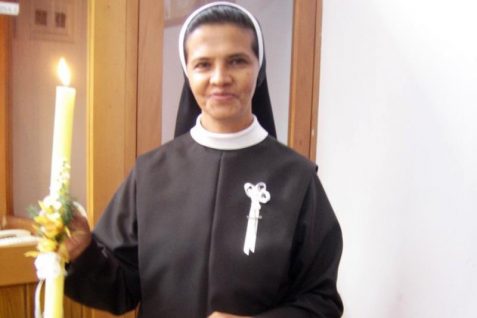
Colombian nun kidnapped in Mali in 2017 is released
Gloria Narvaez, Colombian nun who was kidnapped more than four years ago by al-Qaida-linked extremists in Mali has been released. The nun was kidnapped in February 2017 near Mali’s border with …

Over 150 hectares of sugarcane fields have been destroyed in Cameroon due to violent clashes between workers at the Société Sucrière du Cameroun (SOSUCAM) and police. The unrest, which erupted earlier …
FIFA has announced the immediate suspension of the Congolese Football Federation (FECOFOOT), following escalating tensions between the Ministry of Sports and the football body. The dispute, which has been ongoing for …
A federal judge has delivered a major blow to President Donald Trump and his ally, billionaire Elon Musk, halting plans to pull thousands of staffers from the U.S. Agency for International …
Gloria Narvaez, Colombian nun who was kidnapped more than four years ago by al-Qaida-linked extremists in Mali has been released. The nun was kidnapped in February 2017 near Mali’s border with …
Gloria Narvaez, Colombian nun who was kidnapped more than four years ago by al-Qaida-linked extremists in Mali has been released.
The nun was kidnapped in February 2017 near Mali’s border with Burkina Faso.
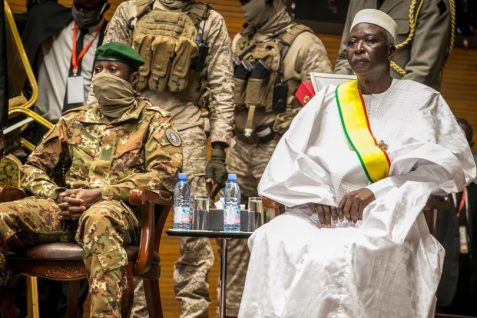
The conditions of her release have not been revealed. Assimi Goita, President of Mali’s transitional government , members of army with Colombian nun Gloria Narvaez
She was received by Mali’s transitional president on Saturday where she expressed her gratitude to the authorities.
“I thank the Malian authorities, the president, all the Malian authorities, for all the effort you’ve made to liberate us, may God bless you, may God bless Mali. I thank you very much.“
There have been irregular reports of tye nun’s safety over the years. The columbian police however reported several meetings were held to try to secure her release.
“Meetings have been held worldwide, with ambassadors from several European countries, but also from African countries, always in the spirit of seeking the safe release of our compatriot (Gloria Cecilia Narvaez,),” said Jorge Luis Vargas, Director of the Colombian National Police.
The al-Qaida-linked group is still holding several other Westeners, including an American clergyman kidnapped in Niger and a French journalist.
Mali has been trying to contain an Islamic extremist insurgency since 2012.
Extremist rebels were forced from power in Mali’s northern cities with the help of a 2013 French-led military operation.
However, the insurgents quickly regrouped in the desert and began launching frequent attacks on the Malian army and its allies fighting the insurgency.
The extremists have expanded their reach well into central Mali.
Mali will launch a nationwide debate on reform this month, an official document said, in what the army-dominated government views as a pre-condition for returning to civilian rule. A “national forum …
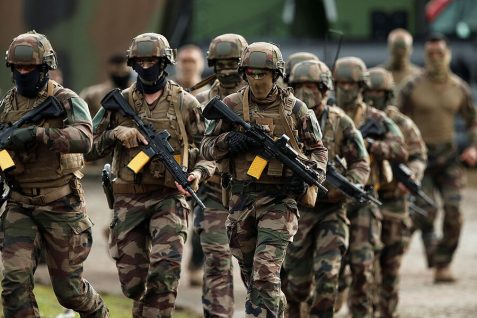
Mali will launch a nationwide debate on reform this month, an official document said, in what the army-dominated government views as a pre-condition for returning to civilian rule.
A “national forum on rebuilding” will kick off at local level on October 25 and then move into higher gear, at national level, between November 15-21, according to a government document seen by AFP late Thursday.
The war-torn Sahel country is facing international pressure to swiftly restore civilian rule after the military seized power in August 2020, and then deposed another civilian-led government in May.
Malian strongman Colonel Assimi Goita has pledged to hold elections in February next year, but his government has been slow to make preparations for the poll, casting doubt on the timetable.
With mounting criticism of a possible delay from the UN and the regional bloc ECOWAS, interim prime minister Choguel Kokalla Maiga said last month that an election-date decision would only take place after a national debate on what changes were needed.
The poll could be delayed by “two weeks, two months, a few months,” he suggested, explaining that organising peaceful elections took priority over speed.
Military officers led by Goita ousted elected president Ibrahim Boubacar Keita in August 2020, after weeks of protests against the former leader, sparking fears of democratic backsliding across the region.
Under the threat of sanctions, the military appointed an interim civilian government to steer the country back to democratic rule.
This interim government pledged to hold elections in February 2021, as well as a constitutional referendum on October 31.
Goita ousted the leaders of this government in May — in a second coup — but promised to stick to the timetable.
But few now believe elections will take place on time, with the task complicated by Mali’s rampant insecurity.
Swathes of the vast country lie outside of government control because of a jihadist insurgency that first emerged in the north in 2012, before spreading to the centre of the country, as well as neighbouring Burkina Faso and Niger.
Malian collective ‘Yerewolo’ on Wednesday hailed a rumored deal between Mali and Russian mercenary group Wagner, a private security contractor which has also deployed in the Central African Republic. “If Wagner …
Malian collective ‘Yerewolo’ on Wednesday hailed a rumored deal between Mali and Russian mercenary group Wagner, a private security contractor which has also deployed in the Central African Republic.
“If Wagner went to liberate Syria, if Wagner went to liberate the Central African Republic, then we welcome Wagner to Bamako to liberate Mali. To the asymmetric war, we propose an asymmetric solution, which is called Wagner. This is the truth and today it is the end of French Africa,” said Adama Ben Diarra, the spokesperson for ‘Yerewolo’ collective.
Former colonial rulers France and Germany have warned the West African country against a deal with the group, amid claims that it is close to hiring 1,000 mercenaries.
Germany warned Mali on Wednesday that a deal with Russian private security group Wagner would “call into question” its deployment in the West African country as part of United Nations and European Union missions.
“If Mali’s government makes such a deal with Russia, then it goes against everything that Germany, France, the EU and the UN have been doing in Mali over the last eight years,” wrote Defence Minister Annegret Kramp-Karrenbauer on Twitter.
French sources told AFP this week that the Malian government was nearing a deal with Wagner to hire nearly 1,000 mercenaries, an agreement that would underscore Moscow’s growing influence in the region.
French Defence Minister Florence Parly on Tuesday warned Mali against signing a contract with Wagner, saying it would be “incoherent with everything we have done” in the Sahel region.
A spokesperson for the Malian defence ministry has not denied the discussions, which were first reported by Reuters news agency on Monday.
“Mali intends to diversify its relationships in the medium term to ensure the security of the country,” the spokesperson told AFP.
Growing anti-French sentiment in Mali
In May, protestors rallied in central Bamako to show support for junta leader Col. Assimi Goita waving Russian flags and chanting anti-French slogans.
In June, Paris ended military cooperation with the country before reversing the decision a month later.
Many in Mali say the country’s colonial master, which has deployed thousands of troops to fight armed groups since 2013, has no intention to defeat the insurgents but to continue to occupy and exploit the country.
Wagner security has deployed in the Central African Republic, undermining French influence there.
French forces killed the leader of the jihadist group Islamic State in the Greater Sahara (EIGS), Adnan Abu Walid al-Sahrawi, a “major success,” President Emmanuel Macron announced Wednesday night. “This is …
French forces killed the leader of the jihadist group Islamic State in the Greater Sahara (EIGS), Adnan Abu Walid al-Sahrawi, a “major success,” President Emmanuel Macron announced Wednesday night.
“This is another major success in the fight we are waging against terrorist groups in the Sahel,” the French president said on Twitter. This summer, in June and July, Paris had already announced the death or capture of several high-ranking EIGS cadres by the French Barkhane force and its partners, as part of its strategy to target the leaders and cadres of jihadist organizations.
The EIGS leader “died as a result of a strike by the Barkhane force,” French Armed Forces Minister Florence Parly tweeted for her part, also hailing “a decisive blow against this terrorist group. Our fight continues.”
The EIGS, created in 2015 by Adnan Abu Walid al-Sahrawi, a former member of the Polisario Front, and then of the jihadist movement Al-Qaeda in the Islamic Maghreb (AQIM), had been designated as a “priority enemy” in the Sahel, at the summit in Pau (southwestern France), in January 2020.
It is considered to be behind most of the attacks in the “three borders” region, a vast area with vague contours straddling Mali, Niger and Burkina Faso, countries that are among the poorest in the world.
This area is a recurring target of attacks by two armed jihadist groups: the Islamic State in the Greater Sahara (EIGS) and the al-Qaeda affiliated Group for the Support of Islam and Muslims (GSIM).
The EIGS has carried out deadly attacks, targeting civilians and military personnel, in Mali, Niger and Burkina Faso.
It had targeted U.S. soldiers in a deadly attack in October 2017, in which four U.S. Special Forces soldiers and four Nigeriens were killed in an ambush in Tongo Tongo, near Mali in southwestern Niger.
By late 2019, EIGS had carried out a series of large-scale attacks on military bases in Mali and Niger.
And on August 9, 2020, in Niger, the leader of the EIGS had personally ordered the assassination of six French humanitarian workers and their Nigerien guide and driver.