Over 150 hectares of sugarcane fields have been destroyed in Cameroon due to violent clashes between workers at the Société Sucrière du Cameroun (SOSUCAM) and police. The unrest, which erupted earlier …
FIFA has announced the immediate suspension of the Congolese Football Federation (FECOFOOT), following escalating tensions between the Ministry of Sports and the football body. The dispute, which has been ongoing for …
A federal judge has delivered a major blow to President Donald Trump and his ally, billionaire Elon Musk, halting plans to pull thousands of staffers from the U.S. Agency for International …
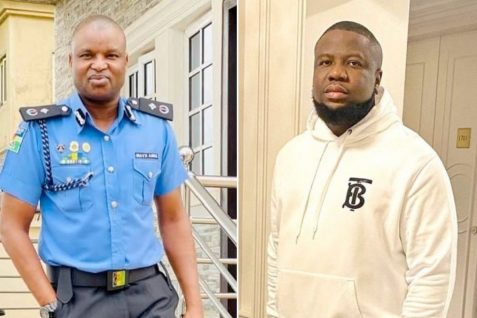
The Police Service Commission has suspended Deputy Commissioner of Police and Head of the Intelligence Response Team (IRT) of the Nigeria Police Force, Abba Kyari, from office A statement from the commissions …
The Police Service Commission has suspended Deputy Commissioner of Police and Head of the Intelligence Response Team (IRT) of the Nigeria Police Force, Abba Kyari, from office
A statement from the commissions spokesperson, Ifeanyi Ani, says Abba Kyari’s suspension took effect from Saturday, July 31st, 2021 and would subsist pending the outcome of the investigation in respect of his indictment by the Federal Bureau of Investigation of the United States.
He said the Commission’s decision which was conveyed in a letter with reference, PSC/POL/D/153/vol/V/138 to the Inspector General of Police today, Sunday, August 1st, 2021, was signed by Hon. Justice Clara Bata Ogunbiyi, a retired Justice of the Supreme Court and Honourable Commissioner 1 in the Commission for the Commission’s Chairman, Alhaji Musiliu Smith, a retired Inspector General of Police who is currently on leave.
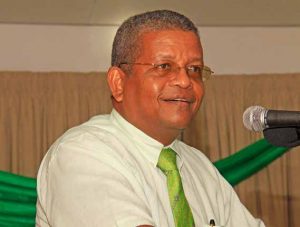
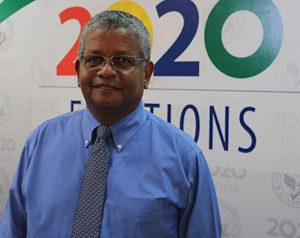
Seychelles opposition candidate Wavel Ramkalawan has won the archipelago’s presidential election with 54.9 percent of valid votes cast, upsetting incumbent President Danny Faure. “I declare… Ramkalawan as the elected candidate,” the …
Seychelles opposition candidate Wavel Ramkalawan has won the archipelago’s presidential election with 54.9 percent of valid votes cast, upsetting incumbent President Danny Faure.
“I declare… Ramkalawan as the elected candidate,” the electoral commission chairman Danny Lucas said on Sunday.
The opposition, narrowly defeated in a presidential election in 2015 and buoyed by a landmark victory in a parliamentary poll a year later, won its first presidential poll in the 40 years since Seychelles gained independence from Britain.
Ramkalawan, an Anglican priest and leader of the Seychelles Democratic Alliance, was running for the presidency for the sixth time. He lost the 2015 poll by 193 votes to James Michel in an unprecedented second round of voting.
“Faure and I are good friends. And an election does not mean the end of one’s contribution to one’s motherland,”
Ramkalawan said in his victory speech. “In this election, there were no losers, there were no winners. Our country was given the opportunity as the ultimate winner.”
As Ramakalawan spoke, Faure, who garnered 43.5 percent of the votes, sat close by, nodding his head.
Voters on the main islands of Seychelles cast their ballot on Saturday in presidential and parliamentary elections spanning three days. More than 74,000 registered to take part in the polls.
Seychelles is one of the most unequal countries in the world. There is a small wealthy minority that own hotels and tourist businesses. Many of them are descendants of people from Europe. But majority of the islanders are much less wealthy and many of them descendants of people who were enslaved by colonialists to work on plantations.
The ruling party used to pick up a lot of support from the less wealthy part of the society. The opposition tended to be backed by business owners and wealthier people. It now seems a lot of people have lost confidence in the former ruling party.
The campaign took place mainly over social media, with rallies banned due to the coronavirus.
Seychelles has recorded only 149 cases, mostly imported, but the pandemic has been a burning campaign issue as restrictions on global travel bottom out the tourism industry – a major earner for Seychelles and employer for many of its 98,000 people.
Visitor numbers have collapsed since March in the archipelago nation of 115 islands, normally a popular destination for honeymooners and paradise-seekers drawn by its fine sandy beaches and turquoise waters. Africanewsguru update.
Witnesses say security forces opened fire on #EndSARS protesters gathered in defiance of a curfew in Lagos, Nigeria. Witnesses say soldiers opened fire on demonstrators in Lagos on Tuesday evening after …
Witnesses say security forces opened fire on #EndSARS protesters gathered in defiance of a curfew in Lagos, Nigeria.
Witnesses say soldiers opened fire on demonstrators in Lagos on Tuesday evening after they gathered in defiance of a curfew and were blocking a major highway.
Amnesty International says it has “credible evidence” that protesters were killed.
The Nigerian Army responded by tweeting that no soldiers were at the scene.
The state government of Lagos says it will open an investigation into the incident and the state’s governor says he met victims of the shooting in hospital.
For two weeks, Nigeria’s government has struggled to calm protests against police brutality.
Demands include significant police reforms and the prosecution of officers accused of extortion, torture and extrajudicial killings.
At least 15 people have been killed since the protests began on October 8, according to Amnesty International.
An indefinite 24-hour curfew has come into force in Nigeria’s largest city, Lagos, following almost two weeks of youth-led demonstrations against police brutality.
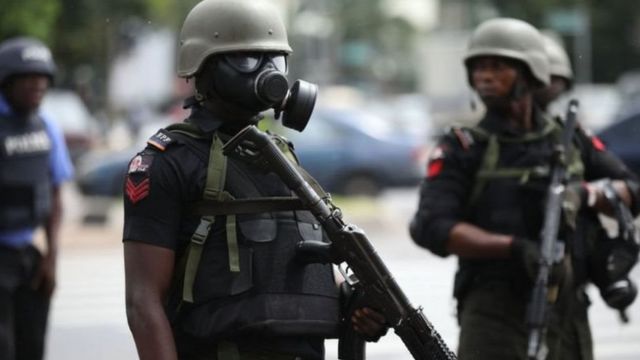
The move on Tuesday came as the country’s police chief ordered the immediate nationwide deployment of anti-riot forces following increased attacks on police facilities, according to a spokesman.
Tens of thousands of people have taken to the streets every day for nearly two weeks across Nigeria to demand an end to police violence, as well as sweeping reforms in the country. Amnesty International says at least 15 people have been killed since the demonstrations began.
Declaring the curfew in Lagos, home to some 20 million people, Governor Babajide Sanwo-Olu alleged that criminals had hijacked the protest movement “to unleash mayhem”.
“Nobody except essential service providers and first responders must be found on the streets” from 4pm local time (15:00 GMT), he said. “We will not watch and allow anarchy in our dear state,” the governor added, saying the protests had “degenerated into a monster”.
The Lagos state governor’s spokesman, Gboyega Akosile, said the curfew would not end on Wednesday. “A 24-hour curfew means all round the clock, day and night. It is indefinite. Nobody moves until we lift the curfew.”
Citizens in Nigeria’s financial hub stocked up on food after the governor’s announcement. Staples such as tomatoes and eggs were sold out in some places as women in markets closed shops and people queued at cash machines. GTBank, one of the largest lenders in Nigeria, said all its branches would remain closed for the duration of the curfew.
As the lockdown went into force, hundreds of defiant protesters sang the national anthem as they pledged to remain out on the streets. “Are you afraid?” a man shouted to the flag-waving crowd from a stage at a tollgate in the city centre that has become the epicentre of the demonstrations.
“We will stay here peacefully,” 32-year-old demonstrator Akin said.“This is our new home.”
The curfew in Lagos came a day after the southern state of Edo imposed a similar measure after a jailbreak by prisoners during demonstrations.
The peaceful and largely leaderless protests, organised under the #EndSARS hashtag, began with calls to scrap a notorious police unit, the Special Anti-Robbery Squad (SARS), which has long been accused of extortion, torture and extrajudicial killings.
After days of widespread demonstrations, the authorities announced the dissolution of SARS and later ordered all personnel to report to the police headquarters in Abuja for debriefing and psychological and medical examinations. Meanwhile, the forming of a new Special Weapons and Tactics (SWAT) team was announced to replace SARS.
However, the announcements did not satisfy protesters, who viewed them as just another renaming exercise and pledged to stay on the streets until promises are delivered and their demands – including the release of those arrested – are met.
Officials have called for protesters to suspend the demonstrations to give the government time to make good on its pledges. Youth Minister Sunday Dare said on Monday the government had met demonstrators’ demands for talks on reforms in law enforcement and urged them to enter into dialogue.
Early in the protests, police fired on protesters in the Surulere area of Lagos and elsewhere. Armed gangs have attacked protesters in Lagos and Abuja, where demonstrators besieged the headquarters of SARS.
Femi Gbajabiamila, speaker of Nigeria’s lower chamber of parliament, said he would not sign off on the federal budget for next year unless it included provisions to compensate victims of police brutality over the past two decades. Africanewsguru update.
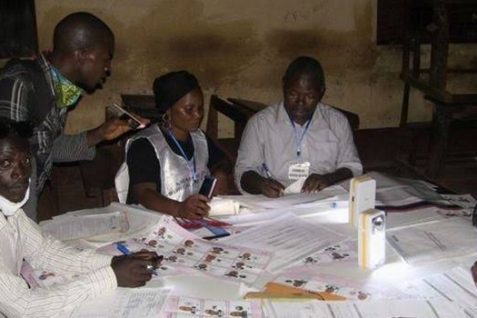
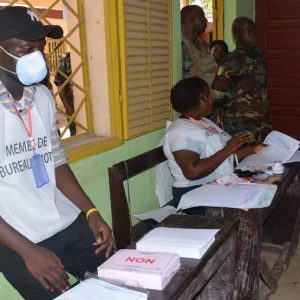
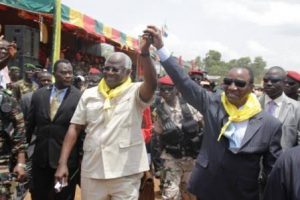
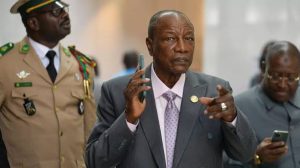
Vote counting is under way after Guinea’s high-stakes election in which the 82-year-old President Alpha Conde is seeking a controversial third term. Sunday’s vote follows months of political unrest, where dozens …
Vote counting is under way after Guinea’s high-stakes election in which the 82-year-old President Alpha Conde is seeking a controversial third term.
Sunday’s vote follows months of political unrest, where dozens of people were killed during security crackdowns on mass anti-Conde protests.
Polls closed after a mostly calm day of voting, but there are already fears of post-election discord after Conde’s main opposition rival, Cellou Dalein Diallo, suggested the president may “cheat”.
“Alpha Conde cannot abandon his desire to grant himself a presidency for life,” Diallo told reporters on Sunday, warning his rival not take power using “cunning and violence”.
Before counting began, his supporters decried ballot-box stuffing and said its observers encountered obstructions at polling stations.
Guinea’s Prime Minister Ibrahima Kassory Fofana said there had been “small incidents here and there”. The results are not expected for several days.
Ten other candidates besides Conde and Diallo were contesting the poll and a second-round runoff vote is scheduled for November 24, if needed.
Political tensions during the campaign raised the spectre of ethnic strife, with Conde accused of exploiting divisions for electoral ends – a charge he denies.
Security Minister Albert Damantang Camara reported that there had been “no major incidents” on Sunday, but that he was concerned about suggestions that Diallo would not accept the result.
Camara urged Diallo to “return to his senses”. Mohamed Fode Camara, a social affairs ministry employee, said he “feared the day when results are announced”. “God will save us,” he said, adding that Guineans “want peace, not a fight”.
Guinea’s politics are mainly drawn along ethnic lines: the president’s base is mostly from the ethnic Malinke community and Diallo’s from the Fulani people.
Much of the tension in Guinea relates to a new constitution Conde pushed through in March, in defiance of mass protests, arguing that it would modernise the country.
The move controversially allowed him to bypass a two-term limit for presidential terms. After decades as an opposition activist, Conde became Guinea’s first democratically elected president in 2010 and won again in 2015 but rights groups now accuse him of veering towards authoritarianism. Africanewsguru update.
Nigeria’s government has ordered the setting up of judicial panels in all the 36 states to investigate allegations of police brutality. The panels will receive and investigate complaints of police brutality, …
Nigeria’s government has ordered the setting up of judicial panels in all the 36 states to investigate allegations of police brutality.
The panels will receive and investigate complaints of police brutality, including those linked to the disbanded Special Anti-Robbery Squad, known as Sars.
The panels will also investigate incidents of police using excessive force against protesters since demonstrations started last week.
This is in addition to an independent panel of investigation to be set up by Nigeria’s National Human Rights Commission.
Thousands of Nigerians have been protesting in major cities against police brutality.
Rights groups including Human Rights Watch and Amnesty International have condemned the use of force against demonstrators during the initial days of the protests.
They have called for police reforms and the prosecution of those responsible for brutality.
Amnesty said some 10 people were killed in the protests and hundreds injured.
The governor of Lagos state said police officers who allegedly opened fire on protesters there have been arrested and are being tried. But the demonstrators appear unsatisfied. Stay tuned for much more updates on the on-going protest in all the cities of Nigeria. Africanewsguru update.
The World Health Organization (WHO) said on Thursday it was setting up a seven-person independent commission to investigate claims of sexual exploitation and abuse by aid workers during the recent Ebola …
The World Health Organization (WHO) said on Thursday it was setting up a seven-person independent commission to investigate claims of sexual exploitation and abuse by aid workers during the recent Ebola outbreak in the Democratic Republic of the Congo (DRC).
In an investigation published last month by the Thomson Reuters Foundation and The New Humanitarian, more than 50 women accused aid workers from the WHO and leading charities of demanding sex in exchange for jobs during the 2018-2020 crisis.
Five out of seven of the organisations named in the expose have pledged to investigate, as has DRC’s health ministry.
Leading the WHO inquiry will be Aichatou Mindaoudou, Niger’s former minister of foreign affairs and social development, and Julienne Lusenge, a Congolese human rights activist, the UN agency said in a statement.
Lusenge is known for her work advocating for victims of sexual violence in eastern DRC and co-founded a Congolese women’s rights group that supports survivors.
Mindaoudou has been a UN special representative to Ivory Coast and Darfur since working for the government of Niger. The two co-chairs will choose up to five other people with expertise in sexual exploitation and abuse, emergency response and investigations to join the commission, the WHO said.
“The role of the independent commission will be to swiftly establish the facts, identify and support survivors, ensure that any ongoing abuse has stopped, and hold perpetrators to account,” said WHO Director-General Tedros Adhanom Ghebreyesus in a briefing to member states.
The WHO will also hire an independent and external organisation with experience in conducting similar inquiries to support the commission’s work, he added.
The majority of the allegations in DRC were against men who said they worked for the WHO. The agency has said it was “outraged” to learn of the reports and reiterated its zero-tolerance policy against sexual exploitation and abuse.
Most of the women – many of whose accounts were backed up by aid agency drivers and local NGO workers – said numerous men had either propositioned them, forced them to have sex in exchange for a job, or ended contracts when they refused. Africanewsguru update.
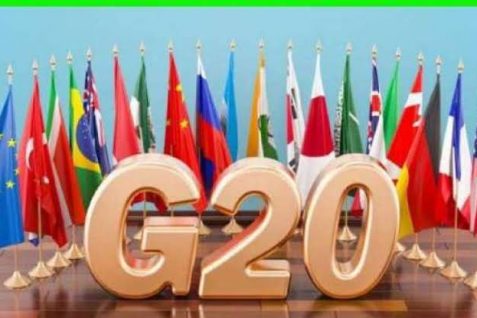
The Group of 20 nations, representing the world’s biggest economies, have agreed to extend the suspension of debt payments by an additional six months to support the most vulnerable countries in …
The Group of 20 nations, representing the world’s biggest economies, have agreed to extend the suspension of debt payments by an additional six months to support the most vulnerable countries in their fight against the coronavirus pandemic.
The G-20 says the extension will provide ongoing relief for the $14bn in debt payments that would have come due at the end of the year otherwise. Wednesday’s decision gives developing nations until the end of June 2021 to focus spending on health care and emergency stimulus programs rather than debt repayments.
The G-20 announcement was made initially on Twitter during a meeting of the group’s finance ministers and central bank governors and later confirmed at a news conference. The virtual discussions are being held at the start of this week’s meetings of the 189-nation International Monetary Fund and the World Bank, which are also being conducted virtually because of the coronavirus pandemic.
International aid groups expressed disappointment that more debt relief isn’t being provided by extending the moratorium on debt payments for a full year or by forgiving part of the debt rather than merely suspending payments.
“This pandemic has laid bare a glaring and unjust double standard: The world’s wealthiest countries play by one set of rules, and the world’s poorest by another,” said David McNair, executive director for global policy at ONE, an international aid group.
G20 officials argued that the relief that is being provided is helping 46 of the 73 countries eligible, with efforts under way to expand.
Some critics have also complained that China objected to portions of the debt relief plans that have been advanced.
“It is unfortunate that the pressing need for broader debt relief for poor countries is being stymied by the apparent recalcitrance of China, which has become a major creditor,” said Eswar Prasad, an economics professor at Cornell University and a former head of the IMF’s China division. “China has proven a reluctant participant in multilateral debt relief efforts, putting its narrow economic and geopolitical interests ahead of a collective approach to easing the burden on poor countries.”
“We still need to do more,” Mohammed al-Jadaan, finance minister of Saudi Arabia, this year’s chair of the G-20, acknowledged at a news conference after Wednesday’s meeting. “We must ensure these nations are fully supported in their efforts to tackle the COVID-19 pandemic. …We have agreed to extend the debt service suspension initiative by six months.”
Al-Jadaan said there will be further discussions during April’s meetings to decide whether the suspension should be extended for an additional six months. He stressed that the pandemic has threatened the fiscal stability of many countries, particularly the poorest.
Transparency International, Amnesty International and a collective of groups called CIVICUS had written to the G-20 finance ministers ahead of their meeting to warn that the world is facing a crisis unlike any in the last century and that debt suspension is only a first step. Though the global economy has begun a gradual recovery with the reopening of businesses and borders, the recovery has been sharply uneven.
The groups urged the G-20 nations to suspend debt payments at least through 2021, saying many of the poorest countries are still spending more on debt payments than on life-saving public services. Some countries, like Pakistan, have called for an outright cancellation of debt payments.
Oxfam International said it believes that the six-month extension was “the bare minimum the G-20 could do.”
“The failure to cancel debt payments will only delay the tsunami of debt that will engulf many of the world’s poorest countries, leaving them unable to afford the investment in healthcare and social safety nets so desperately needed,” said Jaime Atienza, an Oxfam official who manages debt policy.
Oxfam and other groups are also calling on private lenders and investment funds to make similar concessions for the poorest countries by suspending their debt repayments.
The G-20, in a final communique, also urged private lenders to join its initiative for debt suspension. Africanewsguru update.
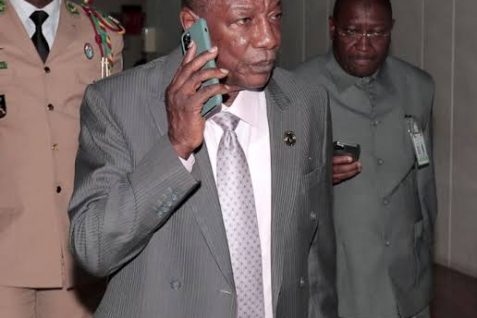
Veteran Guinea President Alpha Conde’s hugely controversial bid to extend his grip on power for a third term has sparked a year of harshly repressed protests in the West African country, …
Veteran Guinea President Alpha Conde’s hugely controversial bid to extend his grip on power for a third term has sparked a year of harshly repressed protests in the West African country, costing dozens of lives.
The octogenarian incumbent’s candidacy was confirmed after a referendum in March – a vote that raised concerns that Guinea will follow in the footsteps of other African nations whose rulers refuse to cede power.
Conde faces former prime minister and main opposition leader Cellou Dalein Diallo in Sunday’s vote.
Opposition parties had organised widespread street protests against the referendum, which were met with a harsh crackdown by security forces.
On October 7, 2019, an opposition coalition, the National Front for the Defence of the Constitution (FNDC), which includes trade unions and civil society groups, calls for demonstrations against an eventual third term in office for Conde.
The opposition suspects that Conde, 82, wants to change the constitution to allow him to stand again in 2020.
On October 14, on the first day of protests, five people are shot dead in clashes in the capital, Conakry, between police and protesters, according to the opposition.
A small number of people took part in scattered demonstrations, but security was out in force, breaking up makeshift barricades and making some arrests as protesters burned tyres and threw stones.
Several other enormous demonstrations follow, organised by the FNDC, sometimes involving tens of thousands of people.
While the opposition says its movement is peaceful, Conde accuses it of seeking to sow disorder and cracks down harshly on protests.
Amnesty International denounces the excessive use of force by the security services, bans on peaceful demonstrations, arbitrary arrests and cases of torture.
In December, Conde announces a new draft constitution.
Opponents say the draft was crafted to get around the country’s two-term presidential limit and denounces a “constitutional coup”.
In January 2020, the opposition urges Guineans “to mobilise massively and everywhere”.
On March 22, Guineans vote to back the new constitution by more than 90 percent at a referendum boycotted by the opposition.
The day of the vote is marred by violence, with scores of polling stations ransacked across the country. Authorities report 30 dead in the second city of Nzerekore.
Conde’s RPG party wins legislative elections held at the same time.
The opposition rejects the results and the United States, European Union and former colonial power France cast doubt on the vote’s credibility.
On August 6, the RPG asks Conde to be its candidate at the presidential election.
On September 2, ending months of ambiguity, he confirms he will stand.
The opposition promises to stage new protests.
On September 9, a split emerges within anti-Conde ranks and Diallo is sidelined for deciding to take part in the election, rather than boycott it.
On September 29, protesters and security forces clash in Conakry, with a man shot dead during protests a day later in the central city of Dalaba during an election campaign visit by the prime minister.
In early October, Amnesty says at least 50 people were killed and 200 others injured during protests against Conde between October 2019 and July 2020 in which the opposition says more than 90 people died in the crackdown, a figure rejected by the government.
On October 7, the United Nations voiced alarm at ethnically charged hate speech. Africanewsguru update.
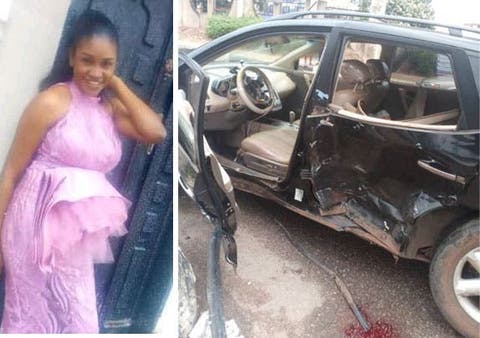
29-year-old woman, Mrs Grace Obajay, lost her life in an auto crash that occurred along Airport Road, Benin City, Edo State, while doctors are still battling to save the life of her one-year and five months old baby, at a private hospital.
Two other persons: the Uber driver and yahoo suspect who also sustained severe injuries were said to be receiving treatment at the hospital.
Information revealed that the deceased who would have been celebrating her two years marriage anniversary in two months, worked with Floret Systems, as its Secretary. She had ordered for Uber last Friday, after the close of work and had occupied the back seat with her baby.
Barely had the Uber driver, Precious John, begun the journey, then a green Toyota Camry on high speed, hit the black Nissan Murano Uber car with plate number RRU 362 NE, from the driver’s side.
The baby was said to have been flung out of the vehicle due to the impact of the hit. He wailed in excruciating pains waiting for the soothing hands of his mother. Unfortunately, his mother according to eyewitnesses, was unconscious and was bleeding from the mouth and nose.
The elder brother of the Uber driver, Dickson John said, “I got a call from my brother at about 11 am. All he could mutter was ‘ come quickly, I’m dying, I can’t breathe, my chest, accident, airport road…, and the call ended. I tried reaching back to him but could not get him
“I was accompanied to the scene by one of my comrades, Godwin Esosa, where I saw my brother’s car stained with blood and fuel was dripping from its engine but there was no sight of him.
We gathered from eyewitnesses that a team of policemen in a carton colour Audi car was chasing a suspected yahoo boy in a Toyota Camry 2012 model. In his bid to escape from the police, he ran into my brother’s car which was just entering airport road from Saint Paul. The policemen never made an attempt to save them. Rather, they abandoned them to fate.
He said that the Police were aware of the incident right from the first day, adding that some policemen from Federal Operation had paid him a condolence visit.
But identities of the policemen who were chasing the yahoo suspect were yet to be disclosed by the Edo State Police Command, neither was news of their arrest made public.
Meanwhile, the vehicles involved in the incident had reportedly been towed to Aideyean Police station.
An 8-year-old boy has reportedly been tortured by his aunt for eating N50 groundnut. The incident happened at Anantigha, Calabar South, on Sunday, August 16, when the aunt returned from Sunday …
An 8-year-old boy has reportedly been tortured by his aunt for eating N50 groundnut.
The incident happened at Anantigha, Calabar South, on Sunday, August 16, when the aunt returned from Sunday service to discover that the groundnut was gone.
She questioned the 8-year-old boy about it, then plugged in an electric iron and used it to burn his back and buttocks. When she was done, she refused to give him food. Old scars on the boy’s burnt fingers also revealed that it isn’t the first time she has abused him since he started living with her about three years ago.
Speaking with a correspondent on Monday, August 17, the Principal Counsel, Basic Rights Initiative, James Ibor Esq., said they received a call from Girl Power Initiative, GPI, about a lady who had been assaulting her nephew with hot iron, burning stove and other hot objects.
According to Ibor, she plugged an electric iron and burnt the boys back and buttocks; because he ate the N50 left-over groundnut and that was not the first time that such was happening.
ALSO READ: 11-year-old orphan narrates how she was assaulted by stepfather
He said:
“From what the boy has told us, which is also very visible; he has been tortured and traumatised; and the boy is in serious pains. From here we are taking him to a medical facility where he can get adequate care.
“We have written to the Police and the state Ministry of Humanities and Social Welfare to enable us take good care of him in our own shelter home; because we cannot allow the child to go back to the aunty again.
“We have also invited the father, because the mother is late. Further actions can be taken as he and two of his siblings live with the said aunty.
“It is unfortunate that this kind of dastardly act and injury can be inflicted on a child. Even if he ate the groundnut, there is no justification for this kind of wickedness.”
We use cookies on our website to give you the most relevant experience by remembering your preferences and repeat visits. By clicking “Accept”, you consent to the use of ALL the cookies.
This website uses cookies to improve your experience while you navigate through the website. Out of these, the cookies that are categorized as necessary are stored on your browser as they are essential for the working of basic functionalities of the website. We also use third-party cookies that help us analyze and understand how you use this website. These cookies will be stored in your browser only with your consent. You also have the option to opt-out of these cookies. But opting out of some of these cookies may affect your browsing experience.
Necessary cookies are absolutely essential for the website to function properly. This category only includes cookies that ensures basic functionalities and security features of the website. These cookies do not store any personal information.
Any cookies that may not be particularly necessary for the website to function and is used specifically to collect user personal data via analytics, ads, other embedded contents are termed as non-necessary cookies. It is mandatory to procure user consent prior to running these cookies on your website.