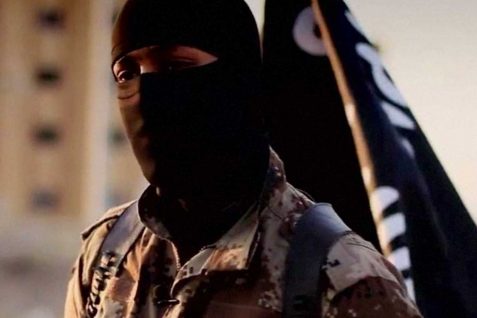
Suspected jihadists kill 14 soldiers in Burkina Faso
Suspected jihadists killed 14 soldiers in an attack in northern Burkina Faso on Monday, the defence ministry said, in the latest bloodshed to hit the region plagued by Islamist violence. “The …

Over 150 hectares of sugarcane fields have been destroyed in Cameroon due to violent clashes between workers at the Société Sucrière du Cameroun (SOSUCAM) and police. The unrest, which erupted earlier …
FIFA has announced the immediate suspension of the Congolese Football Federation (FECOFOOT), following escalating tensions between the Ministry of Sports and the football body. The dispute, which has been ongoing for …
A federal judge has delivered a major blow to President Donald Trump and his ally, billionaire Elon Musk, halting plans to pull thousands of staffers from the U.S. Agency for International …
Suspected jihadists killed 14 soldiers in an attack in northern Burkina Faso on Monday, the defence ministry said, in the latest bloodshed to hit the region plagued by Islamist violence. “The …
Suspected jihadists killed 14 soldiers in an attack in northern Burkina Faso on Monday, the defence ministry said, in the latest bloodshed to hit the region plagued by Islamist violence.
“The military detachment of Yirgou” in the Centre-Nord region’s Barsalogho department was “the target of a terrorist attack” around 0500 GMT on Monday, junior defence minister General Aime Barthelemy Simpore said.
“Fourteen soldiers were killed during the fighting and seven wounded were evacuated,” he said in a statement, with the death toll higher than the nine given earlier by security sources.
“Several terrorists were neutralised during the response,” he added, praising the soldiers’ “great fighting spirit”.
A ground and air counter-offensive was immediately launched to “neutralise the attackers,” he added.
A security source told AFP that there was also an “enormous” amount of equipment lost, with some being burnt and some taken away by the attackers.
Burkina Faso has been regularly hit by deadly jihadist attacks since 2015, mostly in the northern and eastern regions close to the Mali and Niger borders.
But on Saturday it was the south that was hit, with two soldiers killed by a makeshift bomb in Larabin near the Ivory Coast border.
Back in the north, five soldiers were killed during a reconnaissance mission in Mentao last Wednesday, also by a makeshift bomb, the armed forces said.
In mid-September, a suspected jihadist attack killed six gendarmes escorting fuel tanks for a mining company.
Such attacks, normally blamed on jihadists groups affiliated to the Islamic State or Al-Qaeda, have killed around 2,000 people and forced more than 1.4 million to flee their homes.
Tunisian president Kais Saied has appointed the first woman as head of government. The President has met Najla Bouden Romdhane this Wednesday and tasked her with forming a new government. “I …
Tunisian president Kais Saied has appointed the first woman as head of government.
The President has met Najla Bouden Romdhane this Wednesday and tasked her with forming a new government.
“I have decided to task you to form a new government and this is the first time in the history of Tunis that we have a woman as head of government” said Kais Saied.
Last month Tunisians were out in force to demonstrate against the power grab by the president.
The country faces a looming crisis in public finances after years of economic stagnation and political infighting.
The new head of government is a geological engineer with World Bank experience.
Previously she was in charge of implementing World Bank projects at the ministry of education.
Initiative to run from 30 September until 4 November; programme aimed at improving education and integrity capacity-building across FIFA’s member associations. Following the integrity workshops that brought together member associations from the AFC, CONMEBOL and …
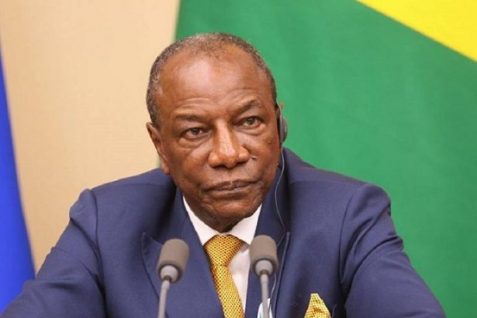
Initiative to run from 30 September until 4 November; programme aimed at improving education and integrity capacity-building across FIFA’s member associations.
Following the integrity workshops that brought together member associations from the AFC, CONMEBOL and Concacaf regions, FIFA is due to start the fourth edition of its Global Integrity Programme, as the CAF member associations come together for five one-day sessions starting on 30 September.
The meetings, concluding on 4 November, will see integrity and anti-corruption experts from FIFA, the United Nations Office on Drugs and Crime (UNODC), CAF and other organisations share knowledge and discuss best practices with integrity officers from across Africa. The modules will focus on key topics, including establishing an integrity initiative, reporting mechanisms, competition protection, media strategy, cooperation between stakeholders, best practices and investigations.
In line with FIFA’s overall vision of making football truly global and its ongoing commitment to protecting and promoting the integrity of the game, the FIFA Global Integrity Programme is aimed at improving education and integrity capacity-building in all 211 member associations by sharing advanced know-how and resources with integrity officers. It also reflects the UNODC’s objective of supporting governments and sports organisations in their efforts to safeguard sport from corruption and crime.
Years of political violence in Guinea have left marks in many people. The story of Ibrahima Sory Sissoko is only one among many, a constant reminder of the political upheaval in …
Years of political violence in Guinea have left marks in many people.
The story of Ibrahima Sory Sissoko is only one among many, a constant reminder of the political upheaval in his country.
Sissoko was injured after the 2020 presidential elections as he was leaving the mosque. He blames his injury on the former president and his police service.
“It was a Friday, right after the 2020 presidential elections, when I left prayers at the mosque. This is when men in police uniforms attacked us, shooting at us. That’s when I was shot in my leg. Another friend I was walking with was shot in the head and he died instantly. I was lucky enough to be rescued by people of good will who brought me to a clinic”, recounts Ibrahima Sory Sissoko, a trader in Conakry.
Photographer Djouldé Diallo was arrested last year at his home joining dozens of other political prisoners incarcerated under Condé’s tenure.
Him along with others were released following the coup that ousted Alpha Condé on the 5th of September.
“….They then sent us to the military tribunal. We were under (pre-trial) investigation, but after that we were awaiting judgement. But since the investigation we were never tried. After ten months, there was the coup d’etat on September 5 which led to our release”, says Djouldé Diallo.
Entrepreneur Sanoussi Barry was also beaten and detained by the police last february for participating in a street protest.
Like many in the country, he is happy to see the end of Alpha Condé’s rule and is hopeful about the future.
“If he does not deviate from his mission by keeping his word, the people of Guinea will have had their saviour. We pray to God that he can organize free, transparent and credible elections”, says Barry.
The military junta that overthrew Condé blames him for corruption and mismanagement but now faces increasing international pressure to release the deposed president and return the country to civilian rule.
Four political parties in Tunisia have warned of a possible return to violence in the country following President Kais Saied’s controversial power grab. The warning took place during a press conference …
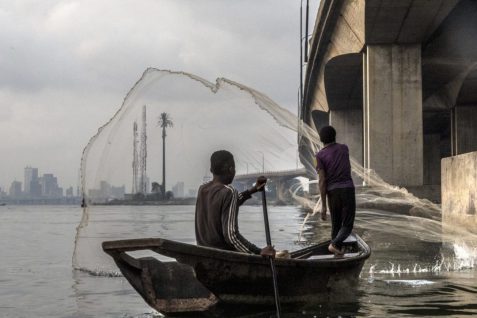
Four political parties in Tunisia have warned of a possible return to violence in the country following President Kais Saied’s controversial power grab.
The warning took place during a press conference on Tuesday in the capital, Tunis.
It follows last week’s suspension of parts of the constitution by the President who is now ruling by decree.
One of the party leaders accused the president of a constitutional coup.
“Today we are living in a time of illegitimacy and we have issued a joint statement after the December 22 decisions. We consider that the president has made a constitutional coup” accused Ghazi Chaouachi, secretary of Democratic Current.
Economist and former minister Fadhel Abdelkefi, whose party Afek Tounes has two seats in the frozen assembly, warned of an impending disaster for Tunisia’s already suffering economy.
“Lebanon can no longer import anything; neither wheat, nor sugar, nor oil. Electricity and water are still cut off. I hope that we will never experience this in Tunisia. He spoke of a wheel that is spinning out of control and I will use the same metaphor to remind him that we are still on the highway and that we risk finding ourselves with unpaid loans”, said Fadhel Abdelkefi
President Kais Saied controversial move follows years of political deadlock exacerbated by the coronavirus pandemic.
At least 20 fishermen were killed accidently in a Nigerian military strike on a jihadist camp in northeast Nigeria, two security sources and locals said on Monday. A Nigerian fighter jet …
At least 20 fishermen were killed accidently in a Nigerian military strike on a jihadist camp in northeast Nigeria, two security sources and locals said on Monday.
A Nigerian fighter jet early on Sunday bombarded Kwatar Daban Masara in Lake Chad, which straddles Nigeria and neighbouring Niger, Chad and Cameroon, the sources said. The area is a bastion for the IS-affiliated Islamic State West Africa Province (ISWAP).
The reports of casualties came less than two weeks after officials say another air strike on a village killed nine civilians in Nigeria’s northeast where the military is battling a 12-year Islamist insurgency.
ISWAP recently lifted a ban on fishermen in its territory, allowing them to move in and fish in the freshwater lake for a fee. That led to an influx of fisherman who had abandoned the area.
“Any fisherman that goes to that area does so at his own risk because it is an enemy territory and there is no way of differentiating them from the terrorists,” one local intelligence source said.
“From the information we have been receiving the death toll is much higher than 20.”
Local fisherman Labo Sani said that the jet strike hit Kwatar Daban Masara at around 6 am (0500 GMT), killing around 20 fishermen.
Kwatar Daban Masara which is on the shores of the lake is the “gateway to ISWAP’s camps on several islands” and a supply route for the jihadists, said Sani from nearby Daban Masara.
Another fisherman, Sallau Arzika, said the fighter jet struck the village “killing many of our people who are there for fishing”.
“The initial death toll was around 20, but the figure has been increasing with the deaths of many of the injured,” Arzika said.
News of the incident was slow the emerge due to limited telecommunications in the region.
A Nigerian air force spokesman did not immediately respond to a message seeking confirmation or comment.
The intelligence source who works with anti-jihadist militia in the region said the strike was based on “credible information” of a gathering of ISWAP fighters in the village since Wednesday.
He said aerial surveillance and reports from other sources revealed terrorists were amassing in Kwatar Daban Masara and it was obvious they were planning an attack, the source said.
According to another security source, the village was subjected to surveillance in the past 10 days after scores of men suspected to be foreign fighters arrived in several vehicles and were ferried to camps inside the lake.
“It was a preemptive strike to destroy whatever plans the terrorists were making,” said the security source.
“You don’t expect an innocent civilian to be at that location and whoever is found is certainly part of the terrorists,” he said.
On September 16 a Nigerian airstrike on a village in nearby Yobe state killed at least nine civilian residents, according to officials.
The Nigerian air force said at the time its fighter jet was pursuing a group of jihadists in the area and it was investigating the incident.
Since 2009, Nigeria’s armed forces have battled a grinding jihadist insurrection in the northeast that has killed more than 40,000 people and displaced nearly two million from their homes.
The conflict spilled into neighbouring Niger, Chad and Cameroon, prompting a regional military coalition to end the violence.
In January 2017 at least 112 people were killed when a fighter jet struck a camp housing 40,000 people displaced by violence in Rann near the border with Cameroon.
The Nigerian military blamed “lack of appropriate marking of the area” for the bombardment in a report it issued six months later.
In July 2019 at least 13 civilians were killed when a Nigerian fighter jet hit Gajiganna village, 50 kilometres from Borno state capital Maiduguri, as it targeted fleeing jihadists after they attacked a nearby base.
Independent investigators mandated by the World Health Organization (WHO) to probe allegations of sexual abuse by its staff in the DR Congo cited “clear structural failures” and “individual negligence” in a …
Independent investigators mandated by the World Health Organization (WHO) to probe allegations of sexual abuse by its staff in the DR Congo cited “clear structural failures” and “individual negligence” in a report released Tuesday.
The abuses were committed by personnel hired locally as well as members of international teams in the country to fight an Ebola outbreak from 2018 to 2020.
The commission interviewed dozens of women who were offered work in exchange for sex, or who were victims of rape.
The 35-page report paints a grim picture, noting “the scale of incidents of sexual exploitation and abuse in the response to the 10th Ebola outbreak, all of which contributed to the increased vulnerability of ‘alleged victims’ who were not provided with the necessary support and assistance required for such degrading experiences”.
WHO Director General Tedros Adhanom Ghebreyesus told a press conference Tuesday that the report “makes for harrowing reading”.
WHO Africa chief Matshidiso Moeti said: “As WHO leadership we apologise to these people, to the women and girls.”
The special commission cited “individual negligence that may amount to professional misconduct” in the report.
It also said it found “clear structural failures and unpreparedness to manage the risks of incidents of sexual exploitation and abuse” in the poor central African country.
And the investigators underscored a “perception of impunity of the institution’s staff on the part of alleged victims”.
Paris will sharply reduce the number of visas granted to people from Algeria, Morocco and Tunisia, accusing the former French colonies of not doing enough to allow illegal immigrants to return, …
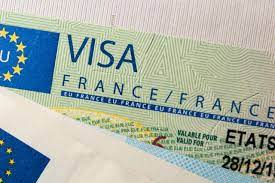
Paris will sharply reduce the number of visas granted to people from Algeria, Morocco and Tunisia, accusing the former French colonies of not doing enough to allow illegal immigrants to return, a government spokesman said Tuesday.
“It’s a drastic decision, and unprecedented, but one made necessary by the fact that these countries are refusing to take back nationals who we do not want or cannot keep in France,” Gabriel Attal told Europe 1 radio.
The station first reported the visa clampdown earlier Tuesday, saying President Emmanuel Macron took the decision a month ago after failed diplomatic efforts with the three North African countries.
Immigration is shaping up to be a key issue in next year’s French presidential election, when Macron is widely expected to face off again against the far-right leader Marine Le Pen.
When visa requests are denied, French authorities must still secure a consular pass in order to forcibly expel individuals to their home countries, a document that Paris says Algiers, Rabat and Tunis are refusing to provide.
“There was dialogue, then there were threats, and today we’re carrying out those threats,” Attal said.
“We’re hoping that the response will be more cooperation with France so that we can apply our immigration rules,” he said.
According to Europe 1, citing administration figures, Macron has ordered the number of visa deliveries to Algeria and Morocco to be halved from 2020 levels, and by a third for Tunisia.
It said that in the case of Algeria, French courts had rejected 7,731 visa requests in the first six months of this year, yet because consular passes had not been granted, only 22 individuals had been expelled from French territory.
For the next six months, Macron has capped visas for Algerians at 31,500, the report said.
France granted a record number of visas — 275,000 — to Algerians in 2019.
The Federal Government has blocked terrorism financing, identified and detained “high profile individuals” responsible for funding terrorists’ activities in the country, Attorney General of the Federation (AGF) and Minister of Justice, Abubakar …
The Federal Government has blocked terrorism financing, identified and detained “high profile individuals” responsible for funding terrorists’ activities in the country, Attorney General of the Federation (AGF) and Minister of Justice, Abubakar Malami, told the News Agency of Nigeria (NAN) in New York.
The AGF had announced in May that government was about to begin the prosecution of about 400 suspected Boko Haram financiers and profiling some high-profile Nigerians strongly suspected to be financing terrorism for prosecution. The delay in their prosecution and unveiling the suspects have been criticised in certain quarters, but Malami assured the federal government was determined to take stringent measures to counter insurgency in the country.
“We have succeeded in identifying those that are responsible for funding terrorists. We have also blocked the leakages associated with funding and then embarking on aggressive investigation that is indeed impacting positively in term of the fight against terrorism.
“But then, the truth of the matter is that investigation is ongoing, is advancing and for the purpose of investigation, I wouldn’t like to be pre-emptive in terms of making disclosures that would have the effect of undermining the successes we are recording as far as investigation is concerned.
“But one thing I can tell you for sure is that whatever we do in terms of detention and in terms of arrest is indeed backed by judicial process.
“We have indeed obtained a legitimate court order taking into consideration what we have presented before the court; the court eventually exercised its discretion in terms of granting orders that we can have them in custody.
“This is pending the conclusion of investigation, which investigation in essence is indeed deeply taking place and we are making a lot of successes and recording a lot of progress in the direction of investigation.”
He, however, said the issue of terrorism financing was a work in progress and would not like to be pre-emptive in terms of investigation.
“But one thing I can say for sure is, arising from such arrests, the terrorist funding and financing has indeed been crippled substantially and that eventually translated to some major improvements being recorded as far as crippling the strength of terrorists is concerned within the nation.
“You can see visibly that we are indeed witnessing tremendous successes associated with the Boko Haram, which translate to significant decimation of the Boko Haram terrorists.
“They (Boko Haram) have been decimated to a larger extent and you can see what is unfolding as far as the North West banditry activities are concerned. They (bandits) are as well been decimated to a larger degree. All these are indeed the effect of what we have done,” he said.
The speaker of Tunisia’s parliament Rached Ghannouchi called Thursday for “peaceful struggle” against a return to “absolute one-man rule. Ghannouchi decribed the situation as “a step back, a decade after Tunisia’s …
The speaker of Tunisia’s parliament Rached Ghannouchi called Thursday for “peaceful struggle” against a return to “absolute one-man rule. Ghannouchi decribed the situation as “a step back, a decade after Tunisia’s 2011 revolution.
“It’s a step backwards. A return to the 1959 constitution. A return to the absolute power of one man against which the revolution took place.”
“There is no longer any alternative to struggle, naturally a peaceful struggle, because we are a civil movement. The Tunisian people are against violence. We hope that Ennahdha, the other parties and the civil society will fight to recover their constitution and their democracy.”
The country’s president announced plans to draft a new electoral code and appoint a transitional leadership – and to hang on to the exceptional powers that he seized in July, throwing the country’s young democracy into question.